WA's building regulator has published guidance on how a home that was approved with double brick walls can be switched to a different wall type part-way through the process, as the State's brick shortage leaves owners choosing between a redesign and a wait.
The guidance from Building and Energy, first published on 23 November 2026 and updated on 24 November, says that because of "brick supply constraints in WA, owners and builders may consider alternative wall types". It gives cavity brick to brick veneer as the example, and sets out what builders, local governments and homeowners each need to do.
When the swap is allowed
The approach only applies when three things are true: the wall construction system is the only thing changing, the owner agrees to the change instead of delaying the project until bricks are available, and the change does not affect any planning approval or other local government requirement on the property.
If the change goes further than the walls, or if it is unclear whether planning approval is affected, for example because the outside of the home will look different, Building and Energy says to contact the local government before going ahead.
Why it still needs approval
A building permit approves one specific design. The regulator says changing the wall system can affect whether the home still meets building standards, including structural adequacy, roof tie-downs, energy efficiency, fire safety and termite management, so a registered building surveyor has to confirm the new design complies.
There is also a paperwork problem at the end of the job. The builder must sign and lodge a notice of completion, known as a BA7, confirming the work was done in line with the permit. If the walls were changed without approval, the guidance says, the builder cannot properly sign it, which "can create legal and liability risks" for the builder, the owner and others.
The guidance also acknowledges a gap in the law: the Building Act 2011 does not set out a specific process for amending a building permit that has already been granted, so councils may record these changes in slightly different ways.
The three steps for builders
First, agree the change and any price adjustment with the owner as a written variation to the building contract, before any work on the changed walls starts.
Second, get a new certificate of design compliance from a registered building surveyor. For an uncertified application that comes from the local government's building surveyor, and for a certified application it comes from the builder's private surveyor. The surveyor may charge for it.
Third, lodge the change with the local government, including the contract variation and its price, the new certificate and amended plans with the changed wall construction clearly marked. Builders are also told to check that their home indemnity insurance is still appropriate.
What councils are being asked to do
Local governments are told to document the change as a separate approval, generally by granting a further building permit for the changed work that sits alongside the existing one.
On cost, the guidance says fees and levies should be based on the value of the change only, not the whole project, and that in most cases approving it "should attract no more than the minimum fee or levy". Councils are encouraged to use their normal processes and to be "practical and flexible" to keep delays to a minimum.
What homeowners should know
The advice to owners is short: a builder should not change the type of walls without the owner's written agreement, and any change, including a change in price, should be set out in a written variation to the contract. Before the new walls are built, the change must be checked by a building surveyor and approved by the local government. Owners are told to ask their builder to confirm the approval and to keep a copy of the building permit documents.
How Perth got here
The guidance is the latest in a run of State responses to the shortage. On 10 November the Government announced a $7.5 million package of freight subsidies for builders importing bricks from interstate and overseas, The West Australian reported, with a rebate of 50 cents a brick for small to medium builders and 25 cents for large builders.
"For the average double brick home, it is expected that the freight subsidy will provide savings of up to $5000 per house." — Roger Cook, Premier, 10 November
A week later came a $2.74 million package to keep bricklaying apprentices in work, with Skills and TAFE Minister Amber-Jade Sanderson saying the Government was "throwing everything at fixing the bricks shortage".
The Government has also put $4 million towards restarting the Cardup brickworks in Byford, which stopped production in 2023. Treasurer Rita Saffioti said on 10 November that would happen in the first quarter of next year, and it is expected to lift production capacity by 10 to 15 per cent.
Housing Industry Association WA boss Michael McGowan told The West Australian that double brick now accounts for about 70 per cent of homes, down from roughly 90 per cent before COVID, and that more builders were looking at brick veneer. But he said a large number of homes already designed for double brick were on fixed-price contracts and needed to keep moving.
What happens next
For anyone with a home under contract and no bricks on site, the choice is now spelled out: wait, or agree to a different wall system and have it certified and approved before the walls go up. Owners with questions about how a change could affect their home are told to talk to their builder or their local government. Building and Energy can be reached on 1300 489 099.
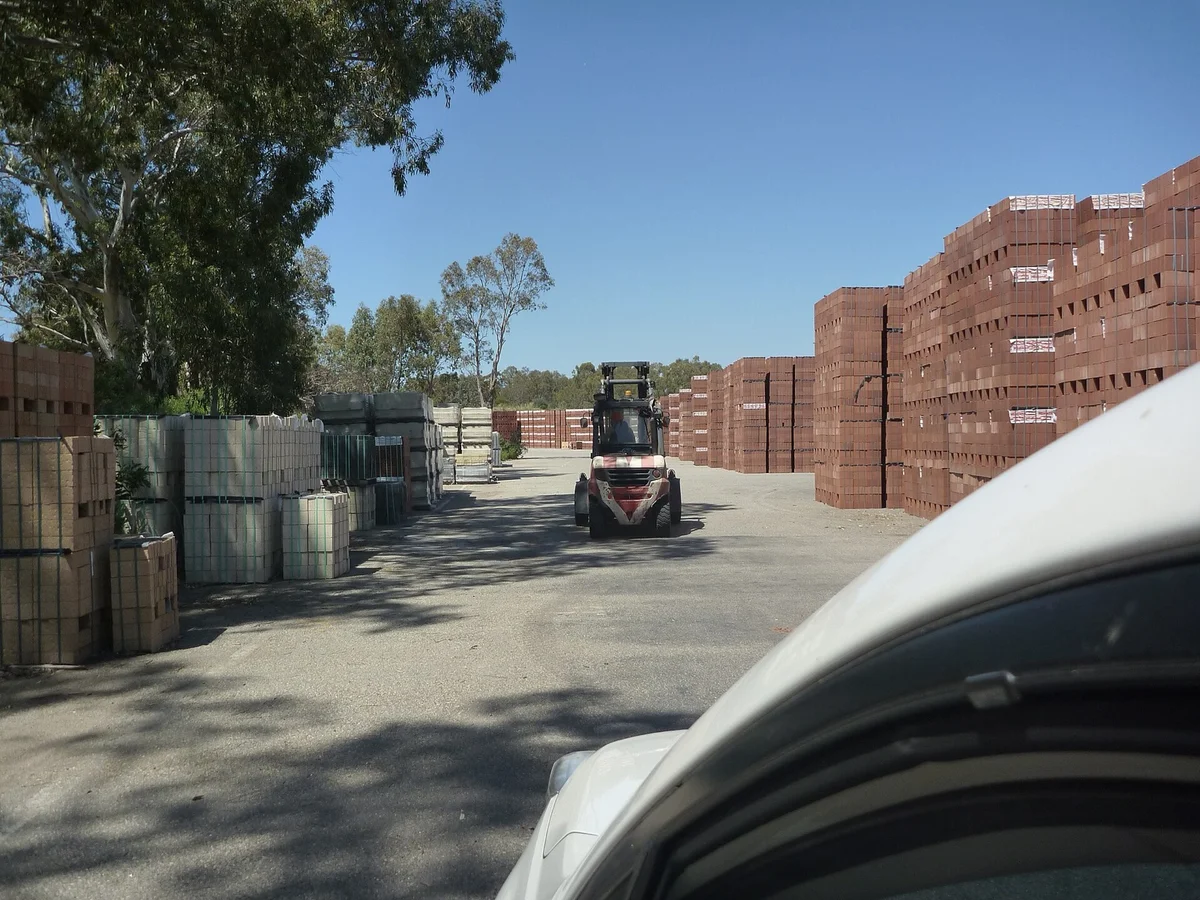
Photo: Sam Wilson via Wikimedia Commons (CC BY-SA 4.0). File photo of a forklift and brick stacks at a Midland Brick yard.





Comments