A proposed $850 million steel mill at Collie has locked in a renewable electricity supply deal with BHP, a step its backers say makes it the first steel mill in Australia contracted to run entirely on renewable power, and the first new steel mill built anywhere in the country in more than 35 years.
Generation Steel, the Australian company formerly known as Green Steel of WA, announced the power purchase agreement on the weekend of 25 October 2026. The deal was picked up by Renew Economy, Australian Manufacturing and other trade outlets, and has been circulating on social media, including in this post on X.
What is being built
The mill would use an electric arc furnace to melt Australian scrap steel and roll it into reinforcing bar, wire rod and merchant bar for the construction industry. According to Renew Economy, it is targeting 450,000 tonnes of rebar a year and would need about 250,000 megawatt hours of electricity annually, roughly the output of 100 megawatts of wind and solar.
It would be Western Australia's first steel mill. Generation Steel says pairing recycled scrap with renewable power should cut emissions to about 272 kilograms of carbon dioxide equivalent per tonne of steel, which Renew Economy reported is around a third of the global average. That figure is a design target, not a measured result.
The BHP deal
The electricity comes from contracts BHP signed to supply its WA Nickel business, whose planned expansion has been shelved. Renew Economy reported the power will be sourced from the Flat Rocks wind farm and the Merredin solar farm, with supply expected to start from 2029. Australian Manufacturing described the agreement as binding, but noted the announcement did not disclose the volume or length of supply.
"Being powered entirely by renewable energy from day one is a defining moment for Generation Steel." — Rajan Aggarwal, co-founder and executive director
BHP WA Nickel's manager of commercial energy and utilities, Rob Whitham, said the arrangement turned surplus renewable energy into a benefit for the wider community and economy.
$850 million or $560 million?
Some coverage has quoted a $560 million price tag. That figure, used by Construction Review, is simply a conversion of A$850 million into US dollars, as the outlet's own project summary makes clear. The Australian-dollar cost is $850 million, which, according to Australian Manufacturing, includes a $40 million cut-and-bend facility added to the plan in July.
Jobs and Collie's coal transition
Collie has powered WA for generations, but the State Government's coal-fired power stations in the town are due to close by the end of the decade. Renew Economy noted the BHP supply is due to begin around the time the last state-owned units shut. Collie is already home to two of Australia's largest batteries.
Generation Steel said in July the mill would support about 500 jobs during construction and 250 ongoing manufacturing roles. The State Government, which put $9.8 million from its $230 million Collie Industrial Transition Fund into the project in June on top of an earlier $4.5 million, has used a slightly lower estimate of up to 217 ongoing positions, Australian Manufacturing reported.
"As Collie's coal industry recedes, we are offering real, long-term, high-skill industrial jobs for the local community." — Don Johnston, co-founder and executive director
The company has also signed a supply partnership with Victorian rebar fabricator Stride Reinforcement, along with memoranda of understanding with builders Lendlease and Laing O'Rourke.
What happens next
The project has not yet reached a final investment decision. Construction Review reported it holds a state works approval granted in August 2024 and federal environmental approval from April 2025, and that detailed engineering and costings are still needed before a final decision. Generation Steel said in July it was aiming to start operations in 2028, while the renewable supply contracts are reported to begin in 2029. The company says further details will be released shortly.
For Perth, the stakes go beyond Collie. Generation Steel argues Australia relies too heavily on imported rebar, and a local mill recycling WA scrap could give the state's builders a closer, lower-emissions supply of a material used in almost every apartment block, bridge and road project.
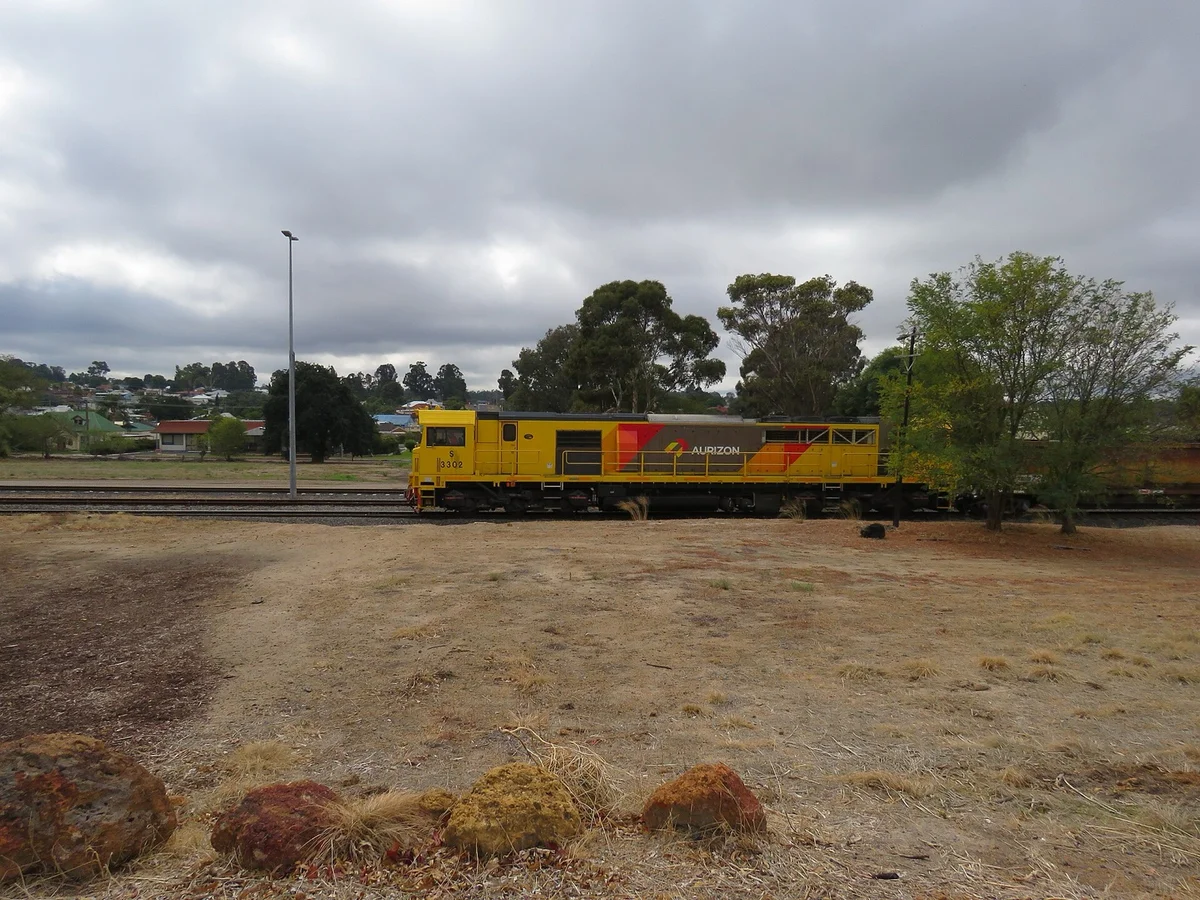
Photo: File photo of a loaded coal train passing through Collie, by Calistemon via Wikimedia Commons (CC BY-SA 4.0).




Comments