Humpback whale mothers and their young calves are making their way down the West Australian coast, and some are coming remarkably close to shore in Geographe Bay. A Dunsborough local said they saw a mother and calf close in earlier this month, with the calf "milk-drunk and excitable" after a feed.
"I've never seen whales so close! Was super stoked." - Dunsborough visitor
It's a sight that draws visitors to the South West every spring. But the state's wildlife authority says anyone heading out on the water needs to keep their distance.
Why the whales are here now
Each year humpbacks travel north along the WA coast in the colder months to the warm waters of the Kimberley, where many give birth. From late winter through spring they head back south, towards their feeding grounds in Antarctic waters. This return leg is when you're most likely to see mothers swimming slowly with calves at their side.
Sheltered bays such as Geographe Bay, off Busselton and Dunsborough, are popular resting spots on the way. Calves are still building their strength, so mothers often swim close to shore and stop to rest and feed them.
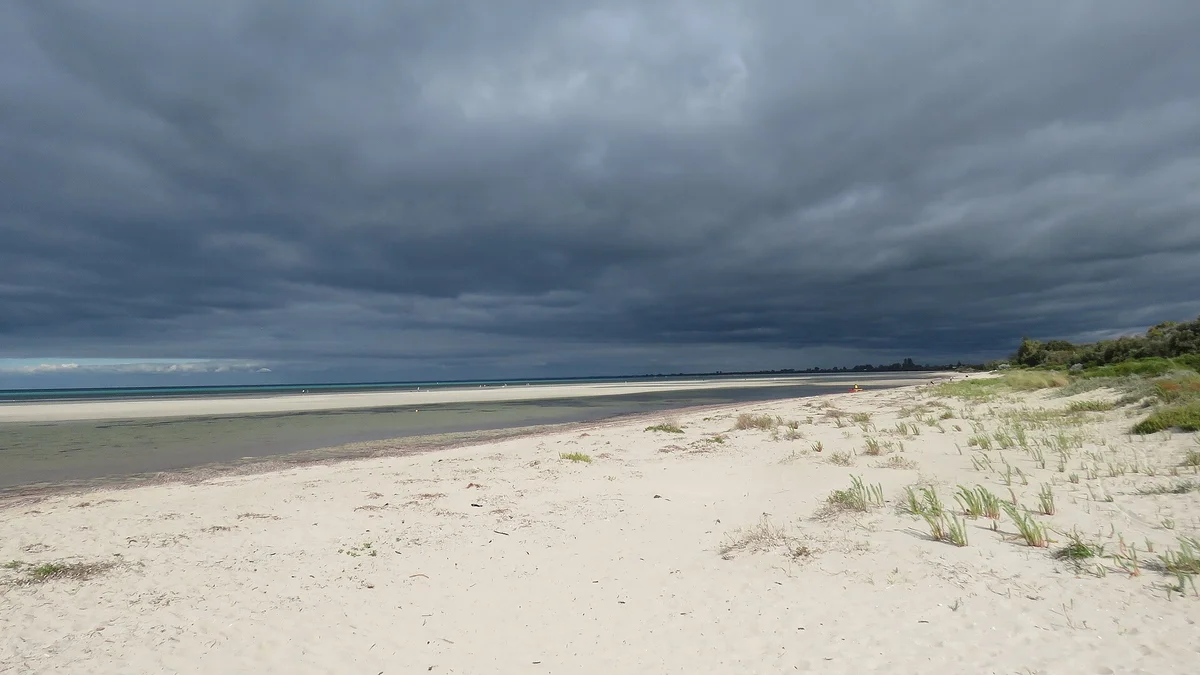
Photo: Calistemon via Wikimedia Commons (CC BY-SA 4.0). Dunsborough Beach and Dunn Bay.
How close can you get?
WA has strict rules for whale watching, and the Department of Biodiversity, Conservation and Attractions (DBCA) reminds people every southern migration to follow them. If you're within 300m of a whale:
- Boats must not go closer than 100m, and must not approach from in front of the whale (within a 60-degree arc of its direction of travel) or from behind. Approach only from the side.
- If a whale comes to you, put your motor in neutral or move slowly away at less than six knots to keep 100m between you.
- Leave the area if the whale shows signs of stress, such as diving for long periods or swimming evasively.
- Swimmers should not approach closer than 100m. DBCA says it is illegal for individuals to swim within 100m of a whale unless they are on a licensed tour.
- Drones must stay at least 60m from a whale.
DBCA has warned that whales are large, powerful animals and may react aggressively if they feel threatened, and that getting too close in a small boat, on a surfboard or kayak, or in the water could put people at risk. Penalties can apply.
Where to watch from land
You don't need a boat. On calm days, the beaches and headlands around Dunsborough, Eagle Bay and Cape Naturaliste give wide views across Geographe Bay. Look for blows (the puff of spray when a whale breathes), a tail lifting before a dive, or splashes from breaching. Binoculars help, and early morning is often the calmest time to look.
Licensed tour operators also run whale-watching trips out of Busselton, Dunsborough and Augusta during the season, and must follow the same rules.
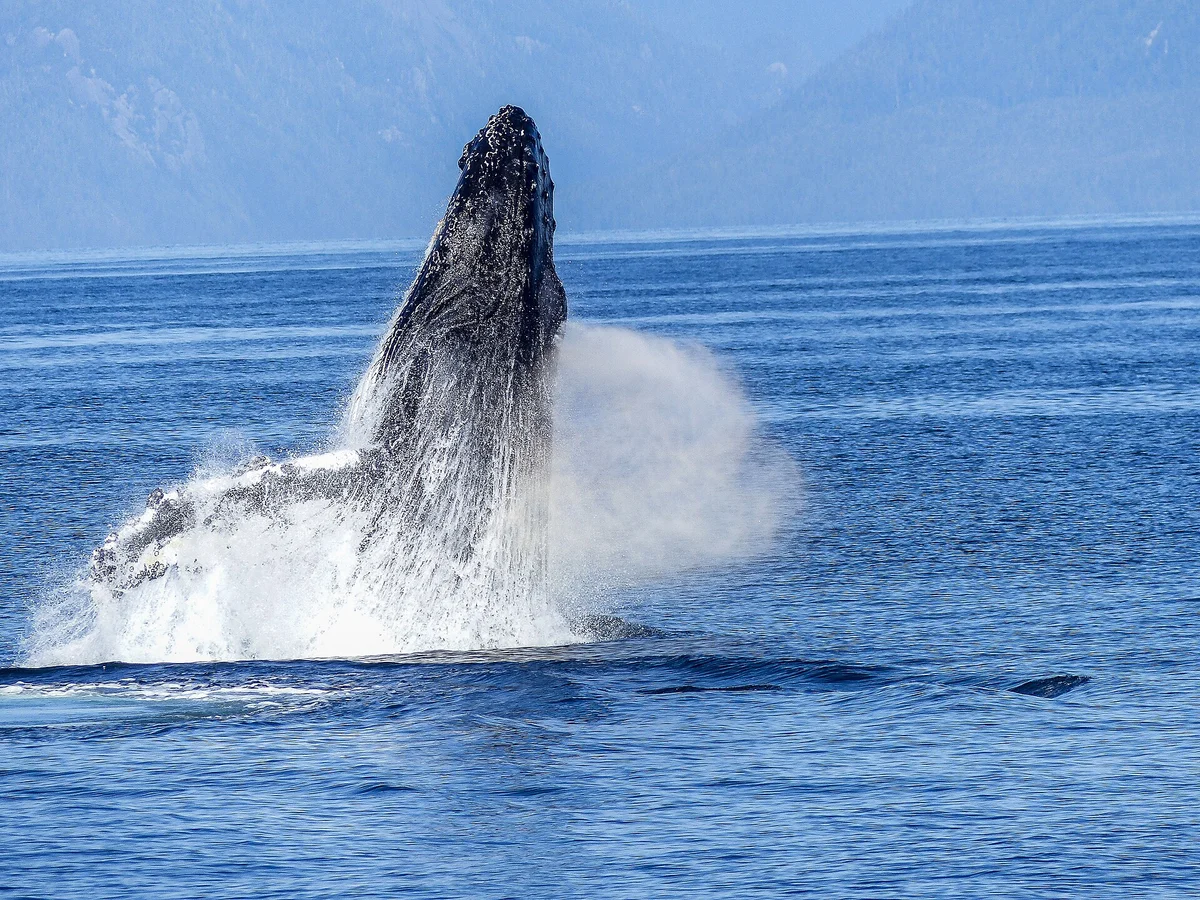
Photo: werner22brigitte via Wikimedia Commons (CC BY-SA 4.0). File photo.
Spot one in trouble?
If you see a whale that looks entangled, stranded or injured, don't try to help it yourself. Report it to the DBCA Wildcare Helpline on (08) 9474 9055.
Sources: Department of Biodiversity, Conservation and Attractions; DBCA, swimming with humpback whales; comments from a Dunsborough visitor.
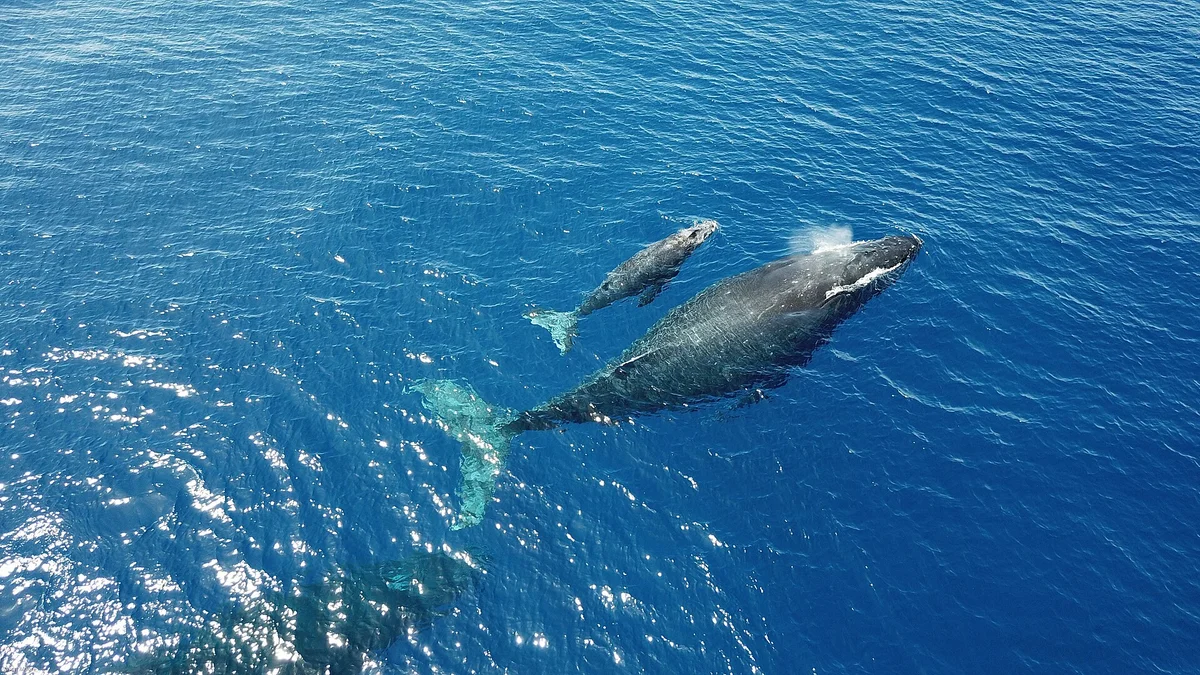
Photo (top): NOAA National Marine Sanctuaries via Wikimedia Commons (Public domain). File photo of a humpback mother and calf, not taken in WA.





Comments