Perth renters are being told to brace for another year of increases, with a new forecast tipping the city's median rent to rise by $64 a week by the end of 2027.
The prediction comes from Perth property investment firm Momentum Wealth, whose 2027 residential market forecast was reported by The West Australian on Sunday night. It expects rents to climb 8 per cent next year, taking the median to $863 a week. Those figures imply a starting point of about $799 a week.
The same forecast expects house prices to go the other way first, slipping over the next six to nine months before recovering to finish 2027 roughly where they started.
Why the firm expects rents to keep rising
Momentum Wealth managing director Damian Collins puts the forecast down to a shortage of rental homes that he says is getting worse, not better. He told The West that Perth has only about a third of the roughly 6,000 rental listings a balanced market would need.
He also blames the Federal Government's changes to negative gearing and the capital gains tax discount, which take effect from 1 July 2027. Negative gearing will be kept for newly built homes, a design meant to steer investors towards new housing. Mr Collins argues it has instead prompted investors to sell.
"If investors are selling into that while demand keeps rising, the shortfall shows up as higher rents." — Damian Collins, managing director, Momentum Wealth
Mr Collins said some of the former rentals now being sold were bought by people who would otherwise be renting, which takes some pressure off. But he said population growth, migration, young adults leaving home, separations and smaller households would keep demand rising.
It is worth keeping in mind who is making the forecast. Momentum Wealth advises property investors, and Mr Collins has been a critic of the tax changes. A forecast is also only a forecast: it is one firm's view of the year ahead, not a measurement.
What the current numbers show
The Real Estate Institute of WA measures the market differently, and its figures give some context. In the September quarter, REIWA put Perth's median house rent at $750 a week and the median unit rent at $700, both unchanged on the previous quarter. The house figure was still up 7.1 per cent since December 2025, and the vacancy rate was 1.7 per cent at the end of September.
REIWA president Rob Mandanici warned at the time that a flat quarter did not mean the market had eased.
"Rent prices still have the potential to increase by 5 to 10 per cent over the calendar year." — Rob Mandanici, president, REIWA
There has been a little more to choose from lately. REIWA's most recent weekly snapshot counted 2,247 properties for rent in Perth at the end of the week to 8 November. That is 12.8 per cent more than four weeks earlier and 6.9 per cent more than a year ago. It is still well short of the 6,000 Mr Collins cites as a balanced market, and REIWA members leased 610 properties that week alone.
An argument over rent caps
The forecast lands in the middle of a wider argument about what, if anything, the State should do. Tenant advocates have called for rent caps. REIWA opposes them, arguing that caps and freezes do nothing to add homes, and earlier this month Mr Mandanici publicly disputed an advocacy group's claim that Perth rents could reach $1,800 a week by 2031. He said annual rent growth had been below 10 per cent in each of the past two years.
An 8 per cent rise would sit inside that recent range. For a household already paying about $800 a week, though, it is an extra $3,300 or so a year.
The West also spoke to a couple in their 20s who moved from Melbourne and have rented a two-bedroom place in Fremantle for $700 a week since March. They said they could no longer find anything comparable at that price, and that further rises could push them to look on the city's outskirts.
What it means for renters and owners
For tenants, the message from both the forecaster and the industry body is the same: do not expect relief soon. Anyone with a lease ending in 2027 should budget for an increase and start looking early, because REIWA says homes are leasing in a median of about two weeks.
For landlords, Mr Collins urged against selling in a hurry to beat the tax changes. He said the capital gains changes apply to gains made from 1 July 2027 and do not reach back to gains already made.
The next hard numbers will come from REIWA's weekly snapshots and its December quarter figures, due in the new year. They will show whether the recent rise in rental listings continues, which is the one thing that could prove the forecast too gloomy.
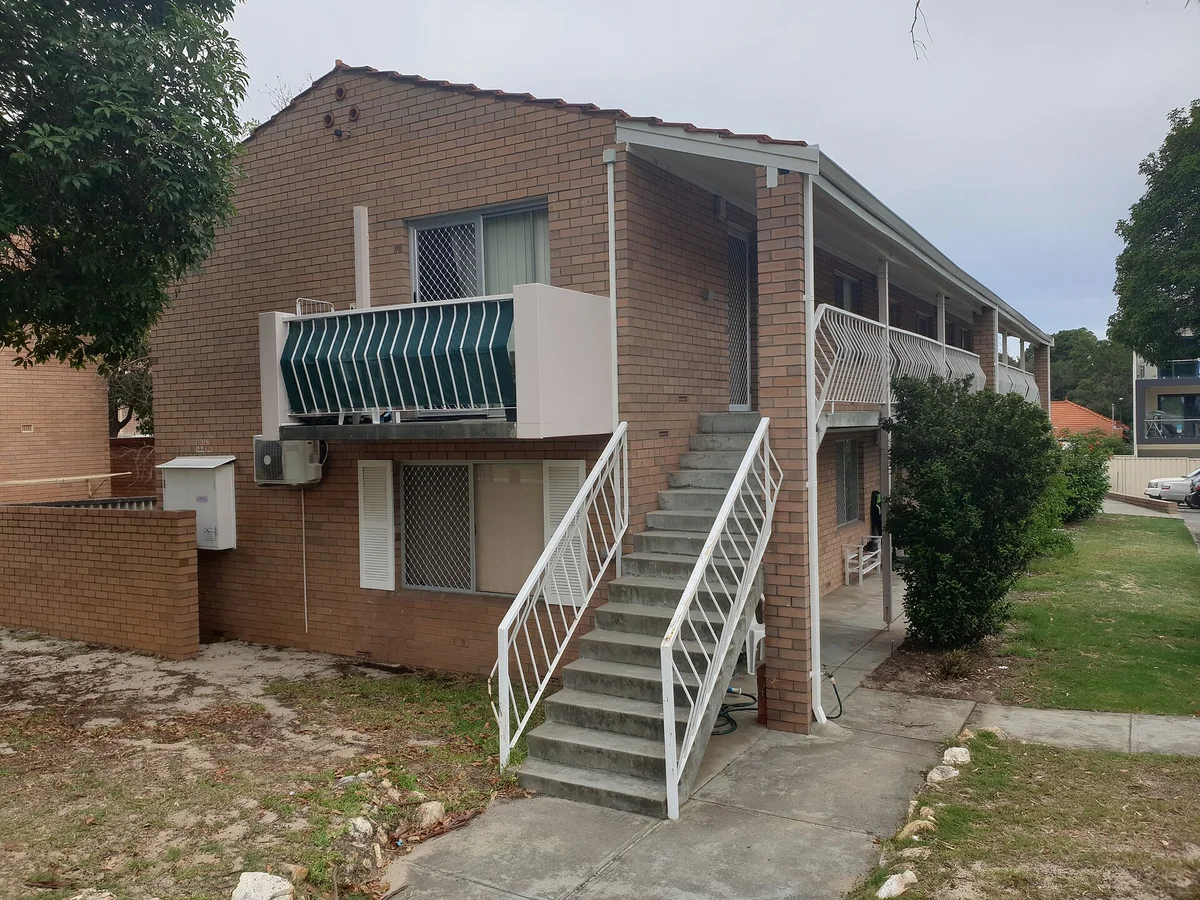
Photo: Orderinchaos via Wikimedia Commons (CC BY-SA 4.0). File photo of apartments in East Victoria Park.





Comments