
A man died after being bitten by a shark while swimming off Sorrento Beach on Friday morning. Police have confirmed the death. They have not named him, have not confirmed his age, and have not said publicly whether his body has been recovered. The City of Joondalup says every beach in the city is shut; the state's own alert describes a slightly shorter stretch of almost 12 kilometres, from Marmion to Iluka.
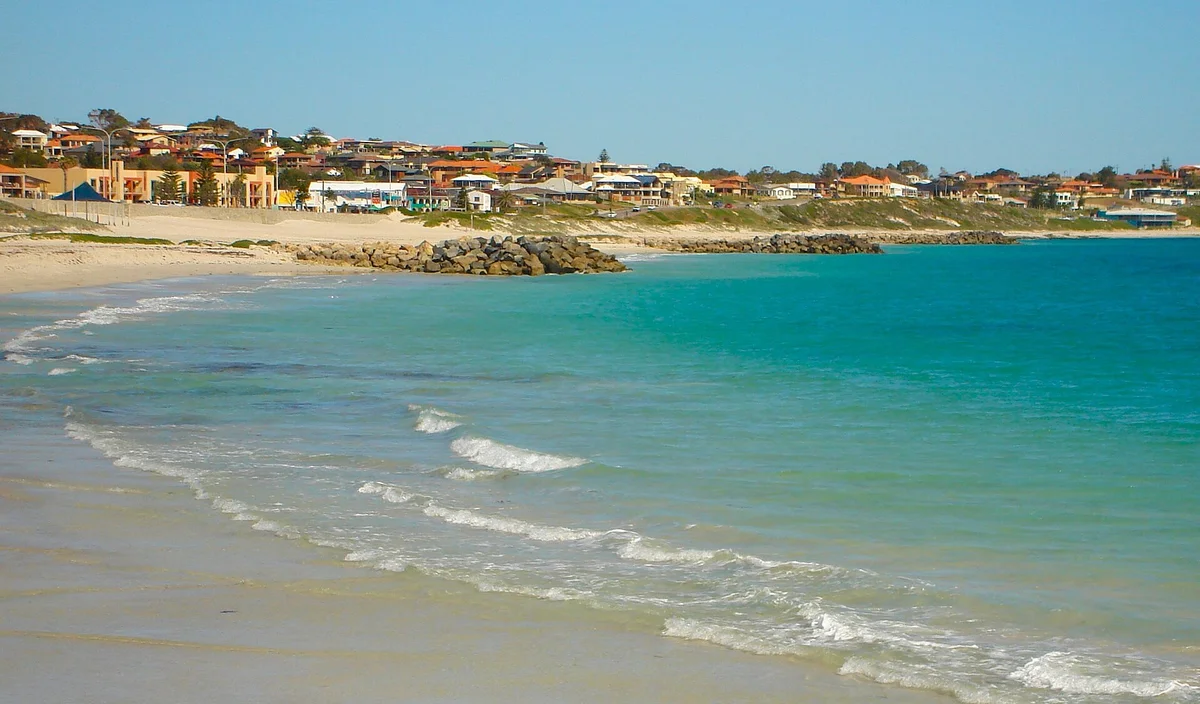
Sorrento Beach photographed from Hillarys, looking south, with one of the rock groynes in the middle distance. File photo from 2009, not taken on the day and not of the scene of Friday's attack. Photo: Rhyshuw1, CC BY-SA 3.0, resized.

This is a developing story, and a good deal of what is circulating about it is not confirmed. What follows separates the official alerts, the police statements, the named witnesses and the reporting, and says plainly where they disagree. Everything Perth has not independently verified the witness accounts.
What happened
The Department of Primary Industries and Regional Development, which runs the state's shark response, logged the first report at 10.15am. Its public alert says the department "received a report of a possible shark related incident at approximately 10:15 am on 18 September 2026 involving a swimmer at Sorrento Beach". St John WA received reports at the same time, according to the ABC. Ambulance crews were later stood down.
That 10.15am figure is when the report was logged, not when the attack happened. No official timeline has been issued. WAtoday reported the attack itself occurred "just after 10am". The West Australian reported first responders were dispatched at about 10.15am after calls for help near Raleigh Road, just south of Hillarys Boat Harbour, and that Surf Life Saving WA logged a shark interaction in the area at 10.20am. AAP, the Guardian, 7NEWS and 9News all put emergency services arriving at about 10.30am. Those are different moments in the same morning, and nobody has reconciled them on the record.
A witness told the ABC she believed two men had been swimming and that only one made it back to shore. Police have not confirmed that a second swimmer was involved. WAtoday reporters at the scene watched forensic police and specialist detectives tape off the stairs to the groyne beside the Sorrento Surf Life Saving Club, and a section of the car park opposite.
How far out he was is genuinely disputed. 9News and 7NEWS, both citing witnesses, put it at about 15 metres from shore. WAtoday and the AFP and Reuters wires put it at about 50 metres. The ABC gives no distance at all. Every one of those is an estimate by someone watching from the sand; there is no measurement.
7NEWS reported that police confirmed the swimmer had died just before 3pm. The statement police gave newsrooms said: "It was reported a male swimmer had been bitten by a shark while swimming along the coast. The swimmer died as a result of the attack."
An extensive air and sea search followed. The Associated Press reported that as of Friday evening no trace of the man had been found. Police had not said publicly whether his body has been recovered, and nothing on the record says whether the search has been called off or continues overnight.
There is still no written media release about the incident on the WA Police website. Every police comment so far has been a statement given directly to newsrooms, and none is attributed to a named officer.
What is not known
- Who he was. Police have not released a name and no outlet has published one. 9News reported he was "aged in his 60s" on its own understanding, and the Associated Press attributed that description to witnesses while noting explicitly that police did not identify him further. Everything Perth is not publishing an age police have not confirmed. Nothing on the public record says whether he has been formally identified or whether next of kin have been told.
- Whether his body has been recovered. Police have not said. One wire report on Friday afternoon said the man had been found. The Associated Press reported the opposite — that no trace of him had been found. The ABC and the AFP wire say nothing either way. Until police speak, the honest position is that it is unknown.
- What kind of shark, and how big. No authority has identified it. Surf Life Saving WA said the species was not identified, and DPIRD's alert names none. At least two unlinked reports are in circulation, and they may overlap. A member of the public reported a 2.5-metre shark off the beach before the attack. Separately, a shark of about five metres was reported to SharkSmart at the nearby Boyinaboat reef just after noon, according to Reuters; 9News reported a roughly five-metre white shark sighted by aerial surveillance in the area, which may be the same report rather than a third sighting, and said it was unclear whether it was the animal responsible. WAtoday described the shark as up to six metres and stated outright that size and species had not been confirmed. None of those reports has been tied to the attack by anyone official.
Who responded, and what is closed
Hillarys, Whitfords and Mullaloo are among the beaches named as closed, and midday Saturday is a review point, not a reopening. DPIRD's wording is that "the beaches will remain closed until 12:00 pm tomorrow when officers from the City of Joondalup will reassess the situation."
The two official notices do not describe the same closure. DPIRD's alert says the City of Joondalup "has closed all beaches in the City of Joondalup from J210 Marmion BEN sign in the south to J37 Iluka BEN Sign to the north" — the BEN signs are the numbered Beach Emergency Number markers used to pinpoint a location in a triple-zero call. The City of Joondalup's own notice describes the closure as covering every beach in the city, from Burns Beach in the north to Marmion in the south, which reaches about a kilometre further north than Iluka, and it sets no end time. The ABC's "almost 12 kilometres" matches the DPIRD span.
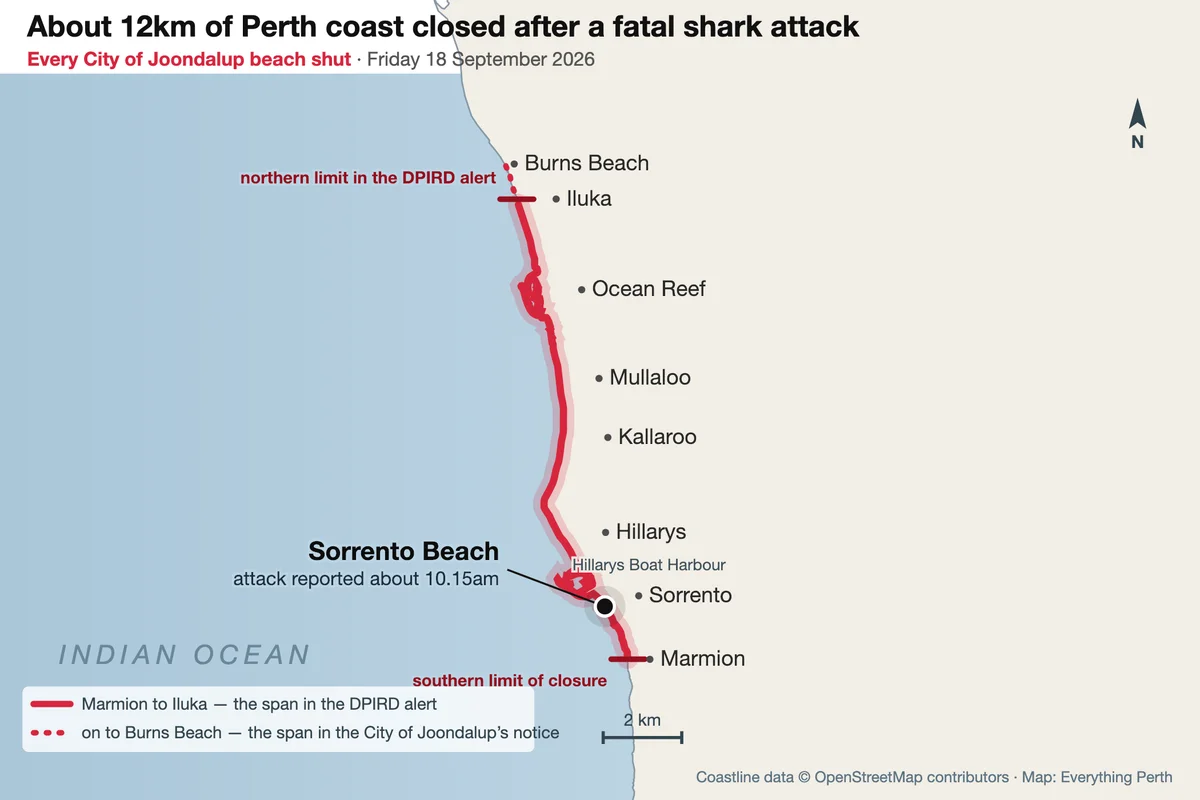
The closed coast. The solid line is the span in DPIRD's alert, from the Marmion Beach Emergency Number sign to the one at Iluka; the dotted section is the further stretch to Burns Beach covered by the City of Joondalup's own notice. Map: Everything Perth. Coastline data © OpenStreetMap contributors.
DPIRD's alert lists the response: WA Police officers on the beach, a Water Police vessel on the water, Surf Life Saving WA's Westpac Lifesaver Rescue Helicopter flying an aerial patrol, a DPIRD patrol vessel monitoring the area, and City of Joondalup officers on the sand warning the public. WAtoday reported that a police boat and helicopter, the Surf Life Saving helicopter and a Fisheries vessel searched close to shore for about an hour before widening out to sea.
No drumlines were deployed, because Western Australia does not have any — more on that below.
What people on the beach saw
Jacqui Rapaic was walking the beach with a friend. She told the ABC:
"My friend said, 'Jac, I think there's been a shark attack' and I looked out to the ocean and I could see a pool of blood."
She said the two of them were left shaken: "I hugged onto my friend … [we] felt rather traumatised at that point. It happened so quickly."
A local nurse who lives nearby and swims at the beach every day told 7NEWS the animal was plainly a large one, and that she would not go back in: "There's no way I'm going to be getting in that water again." What struck her, she told 9News, was how unremarkable the morning had been. "You sort of think sharks, dawn and dusk [and] when it's a bit overcast [is when they attack], but look at the day, it's amazing."
Russell James was on the beach when the shark alarm sounded. He told the ABC that afterwards "there were a bunch of police and ambulances and a few people standing down by the water's edge near the groyne". WAtoday reported the siren, activated by the surf club, sounded repeatedly through the afternoon.
A shark warning was already in force
Seven days before the attack, on 11 September, DPIRD issued a shark WARNING covering Perth metropolitan waters — not a routine sighting notice, but the higher of its standing alert levels. The trigger was repeated hits on the state's network of acoustic receivers:
"A shark WARNING has been issued for Perth metropolitan waters after an increased number of tagged shark detections … A tagged white shark has been detected multiple times over the past three days."
The alert spelled out what that meant for anyone going in: "It is possible that the frequency of the recent tagged shark detections may increase the likelihood of encountering a shark in this area." That warning was still the standing advice for Perth metropolitan waters on Friday morning.
It covered the whole metropolitan coast, not Sorrento specifically, and no source says whether the monitoring network picked anything up near Sorrento that morning. That is a question worth putting to DPIRD.
What was, and was not, in place at Sorrento
What follows is not a criticism of anyone who was on duty, and none of it establishes that any of these measures would have been at that spot at 10.15am on a Friday. The surf club patrols weekends and public holidays even in season; the helicopter flies a Mandurah-to-Yanchep transect rather than hovering over one beach; the Westpac Lifesaver Rescue Helicopter was in the air over Sorrento on Friday, as part of the emergency response. What the calendar does show is that the routine, preventative layers were thinner on 18 September than they will be in a fortnight.
Sorrento is one of the few Perth beaches that used to have a physical barrier. The state government and the City of Joondalup co-funded a 670-metre eco shark barrier there in 2016. It could not survive the swell and the south-westerlies, broke up, and was taken out in 2020. It has never been replaced; the council resolved not to pursue a replacement until a reliable commercial option exists.
Barriers do still operate elsewhere — SharkSmart lists nine, among them Cottesloe, Quinns Beach and Bathers Beach in the metropolitan area. The ABC reports that some are seasonal and are not installed until October, so they were not in the water on 18 September either.
The shark-spotting helicopter does not fly a weekday roster at this time of year. Surf Life Saving WA's metropolitan service, based at Rous Head in North Fremantle, patrols between Mandurah and Yanchep, and the government's own SharkSmart page sets out the schedule: "Patrols are scheduled on weekends throughout September and daily from 26 September 2026 to 30 April 2027." Daily patrols begin eight days from now.
And the beach itself was unpatrolled. Surf Life Saving WA's public listing for Sorrento says the club "conducts patrols of Sorrento Beach over weekends and public holidays between October and April each year". Friday 18 September is neither a weekend nor in season.
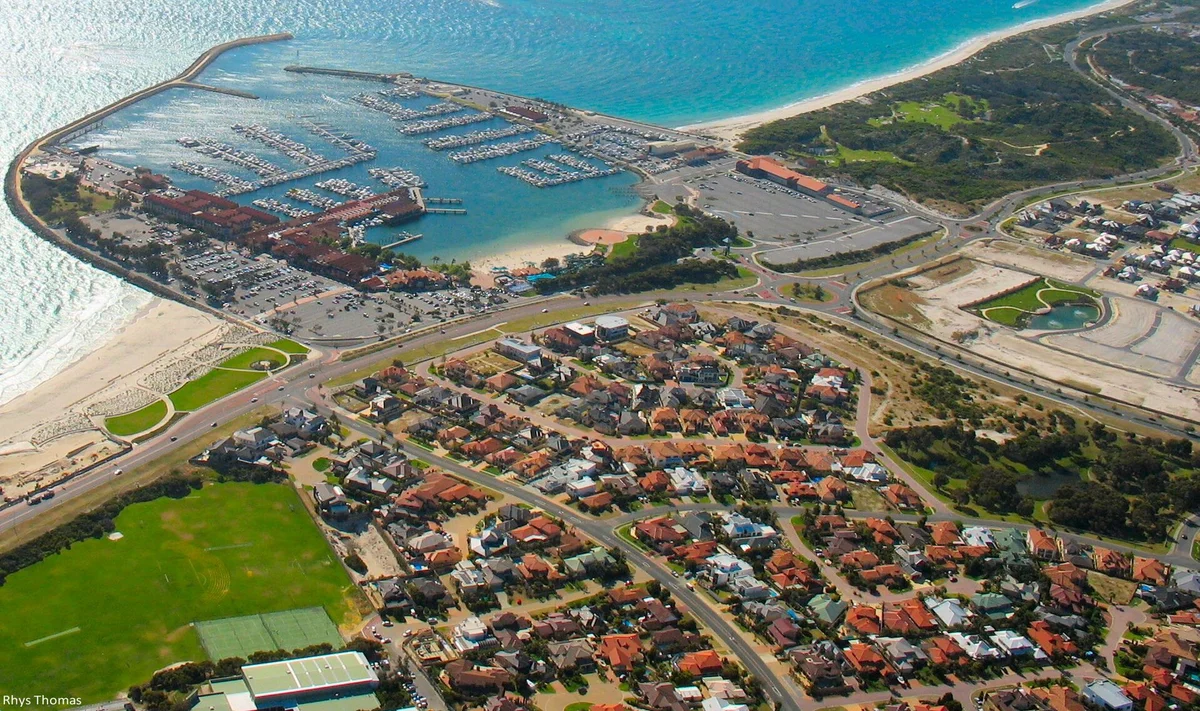
Hillarys Boat Harbour from the air, with Sorrento's open coast running south beyond it. The sheltered beach inside the marina walls is not the beach where Friday's attack happened. File photo from 2009, not taken on the day. Photo: Rhyshuw1 at English Wikipedia, CC BY-SA 3.0, resized.

The second shark attack in Western Australia in four days
On Monday 14 September, DPIRD received a report at about 9.45am that a surfer had been bitten at Glenfield Beach, about 13 kilometres north of Geraldton. Several international wires described that beach as being north of Perth. It is about 430 kilometres north of Perth, and the distinction matters.
The surfer is Mel Ismail, a 56-year-old Geraldton firefighter. Fellow surfer Shannan Dunn reached him and brought him in. "His board was about 5 metres away, and he had his arm up," Dunn told the ABC. "Then it only took a couple of seconds and I saw the blood all around him." Ismail lost his foot from just above the ankle, Dunn said; bystanders improvised a tourniquet from a leg rope and Dunn drove him along the beach to meet paramedics. He remains in Geraldton Health Campus in a stable condition and faces a long recovery.
His family asked for privacy: "We are incredibly grateful for the support and kindness shown by the Geraldton community and to the hospital team caring for our loved one."
DPIRD said in an update timed at 11.45am on Wednesday that the City of Greater Geraldton had reopened beaches in the Glenfield Beach area. DNA testing of Ismail's board and wetsuit to establish the species was still under way as of Friday — a reminder that identifying a shark takes weeks, not hours.
The record
The ABC reports Friday's death is the 24th fatal shark attack in Western Australia since 2000, with 10 of those in the Perth metropolitan area and three this year. The 24 figure checks out against the Australian Shark Incident Database; the Perth metropolitan breakdown is the ABC's own.
The earlier two WA deaths in 2026 were Steven Mattaboni, killed while spearfishing off Rottnest Island in May, and Daniel Turpin, a diver killed near Michaelmas Island off Albany in early June.
Before this year, the last fatal attack on an ocean swimmer at a Perth metropolitan beach was Paul Millachip, 57, taken by a white shark at Port Beach in Fremantle on 6 November 2021 — 21 years to the day after Ken Crew, 49, was killed while swimming at Cottesloe. Bryn Martin, 64, was killed swimming at Cottesloe in October 2011. More recently than any of them, Stella Berry, 16, was killed by a bull shark while swimming in the Swan River at North Fremantle on 4 February 2023.
Nationally, the Australian Shark-Incident Database maintained by Taronga Conservation Society Australia recorded an average of 27 bites a year through the 2020s, of which at least three a year on average were fatal.
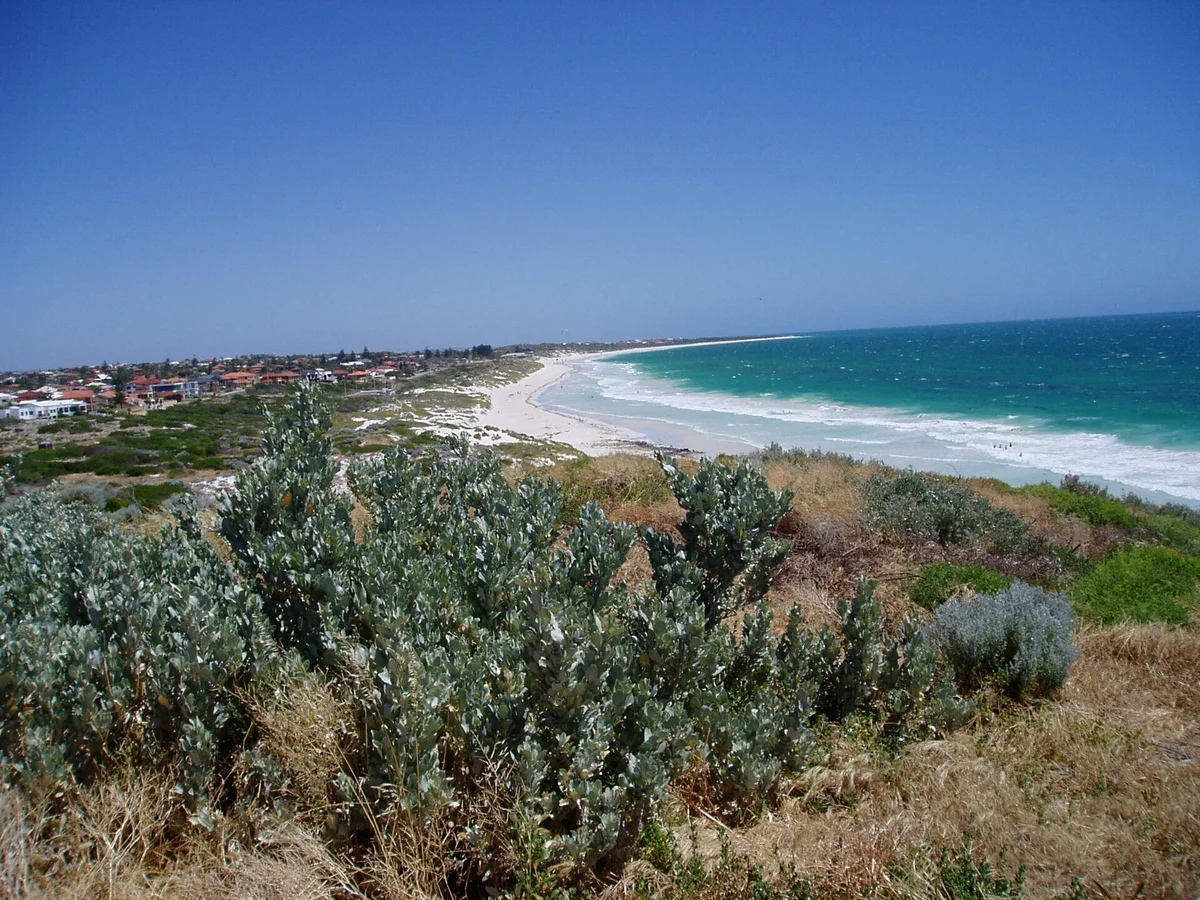
Mullaloo, one of the beaches named in Friday's closure, looking along the stretch of coast now shut. File photo from 2006, not taken on the day. Photo: Andy Robertson, via Wikimedia Commons, public domain, resized.

Why there are no drumlines
Every fatal attack in WA reopens the same argument, so it is worth being exact about where the state stands.
Western Australia ran a two-year non-lethal SMART drumline trial between 21 February 2019 and 20 February 2021, based at Gracetown in the South West — not on the Perth metropolitan coast. Over the two years the lines caught two white sharks, the target species, and 266 non-target sharks including tiger, bronze whaler, shortfin mako, dusky and hammerhead.
WA's Chief Scientist, Professor Peter Klinken AC, reviewed it and concluded the technology "was not effective as a shark mitigation measure in Western Australian conditions and provides no demonstrable value in reducing the potential risk posed by white sharks off the South West coast". The trial ended on his recommendation and the funding went into tagging white sharks instead.
That is why the response at Sorrento was vessels, a helicopter and a beach closure, and no drumlines: there are none to deploy. What WA has instead is the Shark Monitoring Network — acoustic receivers from Perth to Esperance that detect tagged sharks in near real time and trigger automatic posts to SharkSmart and to Surf Life Saving WA's account on X. That is exactly the mechanism that produced the 11 September warning. A seven-year research program found white shark movement is "mostly uncoordinated, which makes it hard to predict when humans might encounter them".
After the two deaths earlier this year, Bond University associate professor Daryl McPhee argued the state should look again: "I definitely think SMART drumlines are something that the WA government should reconsider, given there have been two fatalities in WA in the last month." New South Wales runs more than 300 of them. Premier Roger Cook has ruled it out, backing the tagging program and the SharkSmart app. The government also rejected selective culling.
After Monday's Geraldton attack, Fisheries Minister Jackie Jarvis defended the existing approach: "Western Australia has one of the most comprehensive shark hazard mitigation strategies in the country, using a range of measures to help keep people as safe as possible while they enjoy our coastline."
What officials have said
The Premier's response came as a social media post rather than a press conference:
"This is a heartbreaking tragedy and my thoughts are with the victim's family and loved ones, as well as the first responders who attended the scene."
Local member Liam Staltari said he was "deeply saddened by the tragic death of a man following today's shark attack at Sorrento Beach", adding: "Our entire community is thinking of you at this incredibly difficult time."
Opposition fisheries spokeswoman Kirrilee Warr, who criticised the government's shark strategy after Monday's Geraldton attack, offered condolences to "the victim, their family, friends, first responders and the Sorrento community", saying her thoughts were "with all those affected, particularly those who witnessed or responded to what has occurred".
No WA Government media statement has been issued about the incident, and no minister has spoken about it beyond the Premier's post.
If you are on the coast this weekend
DPIRD's advice is to take additional caution in the Sorrento Beach area and to obey closures directed by local government rangers, Parks and Wildlife Service officers or Surf Life Saving WA. Shark sightings should be reported to Water Police on 9442 8600; those reports are passed to land managers and published on the SharkSmart website, the SharkSmart WA app and Surf Life Saving WA's account on X. Closure status is updated at sharksmart.com.au.
Sources: Department of Primary Industries and Regional Development SharkSmart alerts of 11, 14, 16 and 18 September 2026 — two separate alerts were issued on 18 September as the response escalated; the City of Joondalup's beach closure notice of 18 September 2026; SharkSmart WA programme pages on aerial patrols, the Shark Monitoring Network, beach enclosures and the SMART drumline trial; Surf Life Saving WA's beach listing for Sorrento Beach; ABC News, 14, 15 and 18 September 2026; WAtoday, The West Australian, 7NEWS, 9News, AAP, the Guardian, the BBC, Reuters, AFP and the Associated Press, 18 September 2026; Taronga Conservation Society Australia's Australian Shark-Incident Database. Where sources genuinely conflict — on the time, the distance from shore, the northern boundary of the closure and whether the man has been found — each version is attributed above rather than one being chosen silently. Everything Perth has not independently verified the witness accounts, and has not published the victim's age, which police have not confirmed. This story was accurate as of Friday evening and the situation is still developing.
Comments