The Town of Cambridge has formally set out its position in Western Australia's council amalgamation debate, with councillors voting unanimously on Tuesday night to keep the town's existing boundaries and only consider a merger if it can be shown to deliver a clear net benefit to Cambridge and its ratepayers.
The decision comes as the State Government pushes to make voluntary amalgamations easier, and as the town's elected members point to a balance sheet they say is among the strongest of Perth's western suburbs councils.
What the council decided
According to WAtoday, the motion passed at the 27 October 2026 meeting commits the town to maintaining its current municipal boundaries. It also means Cambridge will not start or pursue an amalgamation proposal unless that proposal can demonstrate a clear net benefit to the town and its community.
The town covers suburbs including Floreat, City Beach and Wembley, and shares borders with the cities of Nedlands, Stirling, Subiaco and Vincent.
Councillor Michael Le Page told the meeting he did not want staff and elected members tied up assessing proposals that offered no obvious value to the town. His concern, he said, was that merging with a council in poor financial shape could leave Cambridge ratepayers contributing to fix problems elsewhere.
"There's really no financial urgency for this town to do anything." — Michael Le Page, Town of Cambridge councillor
Cr Le Page noted the State's approach was voluntary encouragement rather than a mandate, meaning the town could afford to wait and see how the reforms play out.
The financial case
Councillor Matt Delmenico told the meeting the town held more than $77 million in reserves and carried no external debt. He said most neighbouring councils, with the exception of Subiaco, held around 10 per cent or less of that figure.
He pointed to the town's revenue base, which includes commercial tenancies and the council-owned Wembley Golf Course, as the reason Cambridge was in a position to keep its rates competitive.
Cr Delmenico acknowledged amalgamation could bring some financial and operational efficiencies, but argued the costs of merging councils could fall on ratepayers. He cited the experience of a Sydney council formed through amalgamation, saying it had cost $653 per ratepayer along with about $2.5 million in staff redundancies and $2.8 million in IT and systems integration.
He also raised concerns about local representation, arguing that larger councils would spread elected members more thinly and put more distance between councillors and the people they represent.
"A bigger council isn't necessarily a better council." — Matt Delmenico, Town of Cambridge councillor
The State's reform push
The Town's position sits against a broader reform agenda from Local Government Minister Hannah Beazley. In September she announced an overhaul of the sector that includes moving to four-year election cycles and removing the so-called Dadour poll provision, which allows a minority of electors to effectively block an amalgamation proposal.
Ms Beazley has argued WA's 139 local governments and 1111 elected members are too many, and this week called on councils and the Opposition to back her Local Government Amendment and Repeal Bill.
"My local government reform Bill before Parliament will remove barriers to voluntary local government amalgamations." — Hannah Beazley, Local Government Minister
Her comments came in a week dominated by the fallout from the City of South Perth chief executive saga, after which the Minister said she had "had enough" of councils behaving badly. WALGA president Mark Irwin has pushed back, saying the Minister's comments were devaluing the sector.
Cambridge is not alone in keeping its distance from mergers. WAtoday reported that City of Subiaco mayor David McMullen said this month his council was not considering amalgamation with another local government either.
What happens next
Because the State's model relies on councils choosing to merge, the Cambridge vote does not put the town at odds with any legal requirement. It does, however, signal that any neighbour hoping to approach Cambridge will need to bring a detailed case showing what the town's ratepayers would gain.
The bigger question for Perth is how many councils take up the voluntary path once the reform Bill's changes are in place. Councils with healthy reserves and low debt, like Cambridge, have the least financial pressure to move, while the State is betting that removing procedural hurdles will encourage others to start talking.
For western suburbs residents, the vote means the Town of Cambridge is set to remain a stand-alone local government for the foreseeable future.
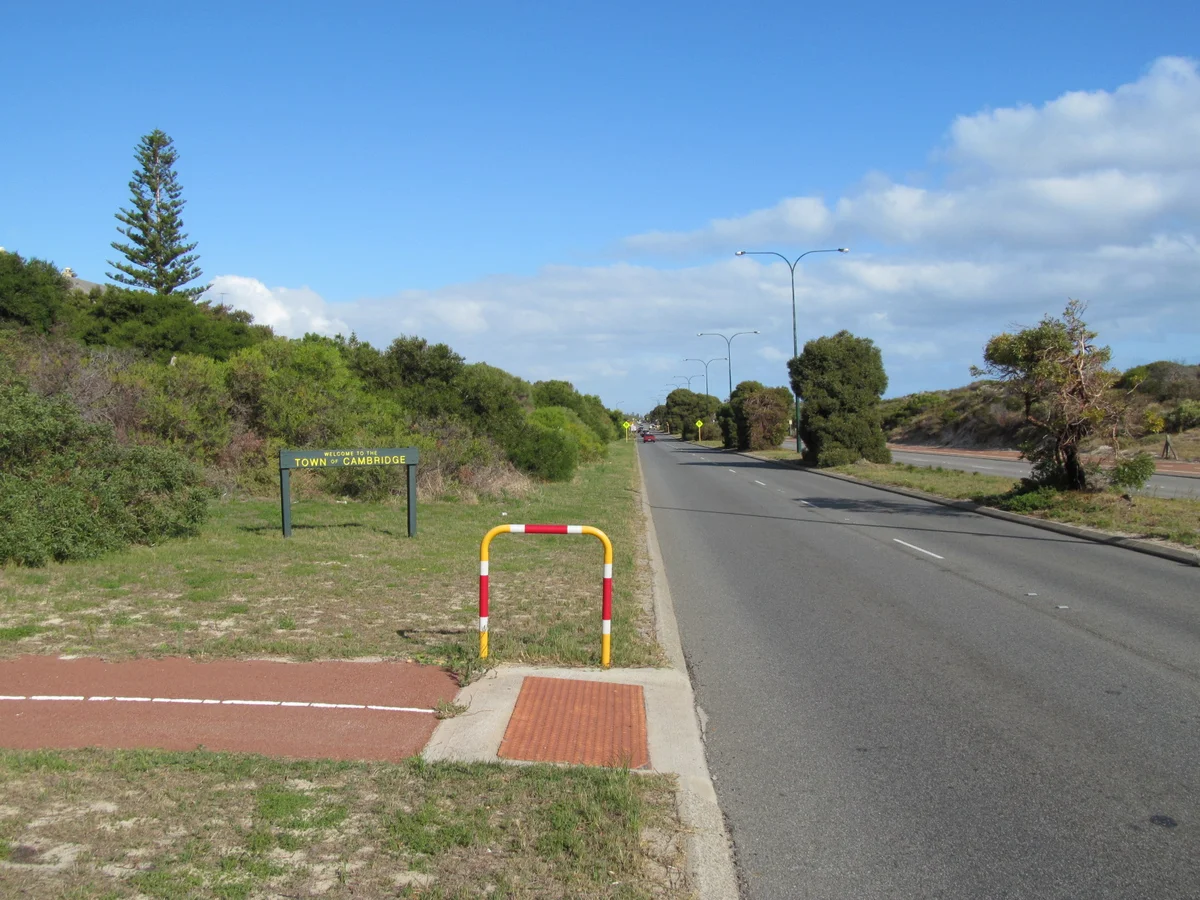
Photo: Orderinchaos via Wikimedia Commons (CC BY-SA 3.0). File photo of a Town of Cambridge welcome sign at City Beach.



Comments