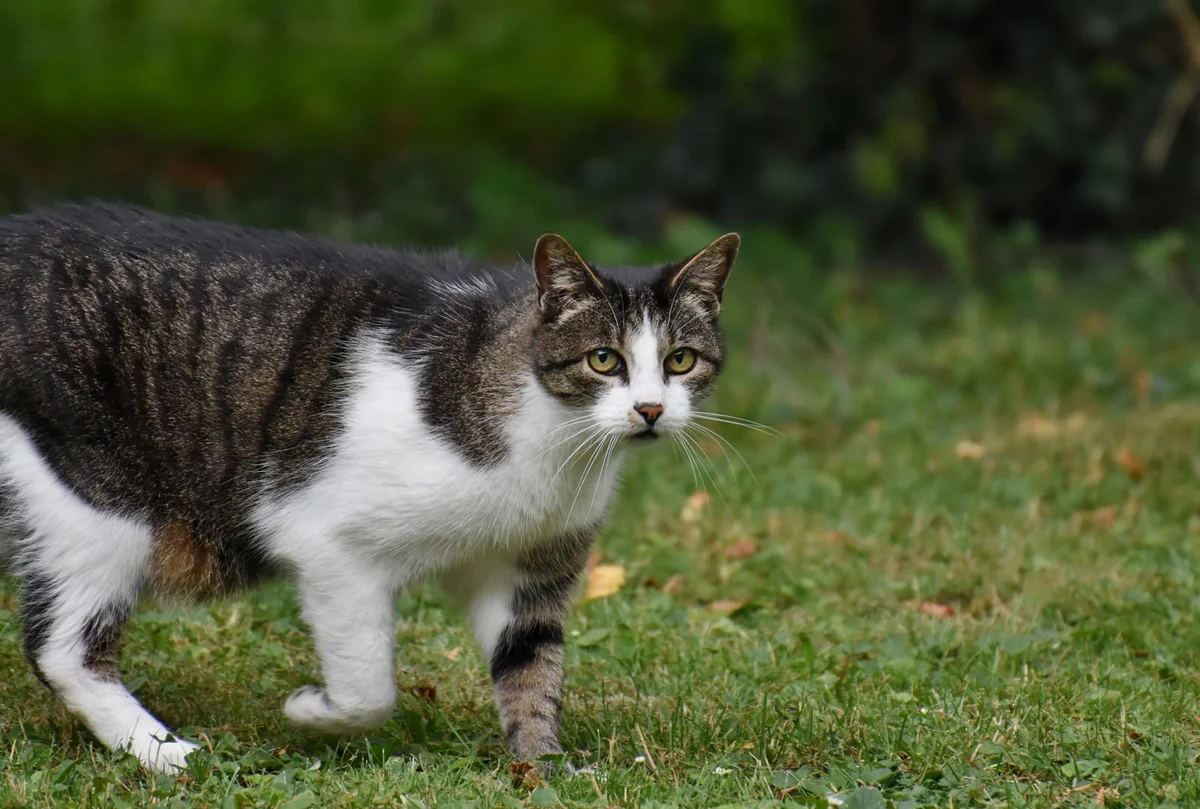

Every local council in Western Australia is a step away from being handed a power it has been asking for, and losing fights over, for the better part of a decade: the power to tell cats where they can and cannot go.
The Cat Amendment (Local Laws) Bill 2026 passed the Legislative Assembly on Tuesday with support from both the Government and the Opposition. It was introduced to the Legislative Council on Wednesday and is now partway through its second reading there. It is not law yet.
The bill itself is three pages long and does not ban a single cat from anywhere. What it does is rewrite one section of the Cat Act 2011 so that councils can lawfully write those bans themselves.
What a council would be able to do
If the bill passes, a council could make a local law that:
- bans cats from any or all public places — the whole district, or just a nominated park or reserve;
- bans a cat from being anywhere other than the property where it is normally kept — full containment at home;
- applies a ban only at certain times of day or year, or during certain events — a night curfew, for instance;
- carves out exceptions — particular places inside a banned area, or situations where the cat is contained or under effective control;
- decides, for its own local law, what "contained" and "under effective control" actually mean.
The bill prints three worked examples of what that looks like in practice: a ban on cats in all public places between 7pm and 5am; a ban on cats in a named park; and a ban on a cat being anywhere except home, unless it is on its way to or at a vet and is contained or under control.
Speaking for the Opposition, Murray–Wellington MP David Bolt put it more plainly. Councils could set up "cat-free areas, curfews, requirements for cats to remain on their owner's premises or requirements for cats to be contained or under effective control when away from home, so we may see more cats on leashes."
Nothing happens automatically
This is the part worth understanding before anyone panics or celebrates. The bill creates no offence, sets no fine, and imposes no statewide rule. It is what lawyers call a head of power — permission for councils to act, not an instruction.
Each of WA's 139 councils would decide for itself whether to do anything at all, and each would have to go through its own local law process to do it. That means the rules could genuinely differ from suburb to suburb: a cat that is perfectly legal on one side of a boundary road could be breaching a local law on the other, and the definition of "effective control" could differ between neighbouring districts.
Bolt argued that was the point. "The circumstances facing an inner metropolitan council can be very different from those being faced in a small regional town, a Wheatbelt shire, a pastoral community or a regional centre."
Why it took this long
Councils have been trying to introduce cat containment rules for years, and have repeatedly been stopped — not by the Government, but by a parliamentary committee doing its job.
The Joint Standing Committee on Delegated Legislation checks that local laws are consistent with the Acts of Parliament they are made under. Its view has been that the Cat Act 2011, as written, did not clearly authorise councils to contain cats. Where a council made such a law anyway, the committee recommended it be disallowed — and the upper house disallowed it.
Geraldton MP Kirrilee Warr, the Opposition's lead speaker on the bill, told Parliament there had been more than 29 attempts by councils to bring in containment local laws, and 29 disallowance motions in the upper house. The Shire of Pingelly's Save the Numbats Local Law and a City of Bayswater local law were among the most recent to be struck down.
Councils, Warr said, had grown reluctant to keep trying: drafting a local law costs ratepayers money, and there was little point spending it on something likely to be disallowed. "The obvious question is: why has it taken so long?"
The numbers behind the push
Figures Warr cited from the Western Australian Feral Cat Working Group, which surveyed all 139 councils and got a 74 per cent response rate:
- 78 per cent of the councils that responded said they would introduce permanent cat containment if there were a clear legal pathway to do it.
- Pet cats in greater Perth kill an estimated one million animals a week.
- Two-thirds of cat owners have had a roaming cat die.
That last figure is the argument owners tend to find more persuasive than the wildlife one: containment is pitched as much at keeping cats alive — off roads, out of fights — as at protecting native birds and reptiles. The WA Local Government Association and the Cat Haven both support the change.
What is still unanswered
Quite a lot, and the Opposition said so while voting for it.
The bill sets no penalties and contains no enforcement provisions — those would sit in each council's local law, and would need rangers to enforce. Warr asked the Government to explain who was consulted in drafting the amendment, what framework and guidance councils would get, and how any of it would be policed. "Giving local governments the ability to make a local law is one thing; giving them a workable and enforceable framework to implement that law is another."
The bill also contains no provision dealing with the containment local laws councils already tried to make and had knocked back, so it is not clear whether those would need to be started again from scratch.
A broader review of the Cat Act 2011 is separately under way — public submissions closed on 31 August. Warr described this bill as "tinkering around the edges" by comparison and urged the Government to get the full review moving.
What happens next
The bill needs to clear the Legislative Council. If it does and receives royal assent, the change takes effect the following day — but that is the starting gun, not the finish line. Nothing changes for any cat owner until their own council chooses to write a local law, consult on it, and adopt it.
Given 78 per cent of councils have said they would, the odds are that a good number of Perth's local governments will start that process. Whether your suburb ends up with a night curfew, a handful of cat-free reserves, or nothing at all will be decided at your council, not in Parliament.
Quotes are taken from the uncorrected daily Hansard proof of the Legislative Assembly, 15 September 2026.
Comments