Western Australia has signed a letter of intent with France to cooperate on critical minerals, with both sides pitching the deal as a path to more processing, refining and French investment in WA projects. State Development Minister David Michael put his name to the agreement alongside French officials at the International Mining and Resources Conference (IMARC) in Sydney on 28 October 2026.
What was signed
The document is a letter of intent rather than a binding contract. According to the State Government, as reported by Australian Mining, it sets up a framework for deeper trade, investment and research links between WA and France across the critical minerals supply chain.
The focus is on the middle and later stages of that chain: midstream and downstream processing, recycling and other value-adding work. The idea is to pair WA's mining know-how and its growing processing capability with French strengths in metallurgy, engineering and industrial technology. Skills development and research collaboration are also part of the arrangement.
The France side was represented by Benjamin Gallezot, the country's Interministerial Delegate for Ores and Metals Supplies, who described the agreement as a step towards diversifying France's supply of critical minerals.
"Strengthening collaboration with France will support investment, innovation, and industry development across the critical minerals value chain." — David Michael, WA State Development Minister
French money on the table
Speaking at IMARC, Mr Gallezot told The Australian Mining Review that France had financing tools that could back WA projects, through either equity stakes or loans. No specific projects or dollar amounts were named.
The agreement comes as countries look to diversify where critical minerals are mined and refined, and to build alternative processing capacity. For WA, it is another attempt to capture more of the value from the minerals it digs up, rather than shipping them offshore for processing.
Green iron a big part of the pitch
While the agreement is framed around critical minerals, both sides spent much of the discussion on green iron. The French delegation pointed to WA's combination of iron ore reserves and renewable energy potential as a natural fit for a steel industry that is shifting towards electric furnaces, processed iron products and recycled steel.
"WA has iron ore and renewable energy, so it can produce iron pellets and be a supplier not only for Europe but worldwide." — Benjamin Gallezot, French Interministerial Delegate for Ores and Metals Supplies
Mr Michael pointed to the State Government's $75 million commitment to the NeoSmelt pilot project and said a Green Steel and Iron Action Plan was being prepared, with release hoped for in 2027. He described getting Pilbara iron ore processed further in WA as an enormous opportunity for the state.
No change on uranium
The French delegation also highlighted growing international demand for uranium. But Mr Michael said the WA Government was not considering a change to its policy against new uranium mines, while adding it would not block projects that already hold approvals.
"It's not something under consideration at the moment." — David Michael, on WA's uranium mining policy
Mr Gallezot said uranium development was a political choice for the WA Government, and that there was no short-term shortage of supply.
The trade relationship
According to State Government figures, two-way trade between WA and France is worth more than $900 million. More than 50 French companies are active in or export to WA, and more than 20 WA companies operate in or export to France. France is also Australia's tenth-largest source of foreign direct investment.
What happens next
A letter of intent is a starting point, and its value will be measured by whether it produces real investment, offtake agreements or joint processing projects in WA. Neither side has yet announced specific projects tied to the deal.
For Perth, the stakes are jobs and diversification. More processing and refining in WA would mean more skilled jobs, and more of the engineering, finance and research work that supports it, much of which is based in Perth. The Green Steel and Iron Action Plan due in 2027 will be the next indicator of how seriously the state intends to pursue the downstream opportunities France says it is interested in.
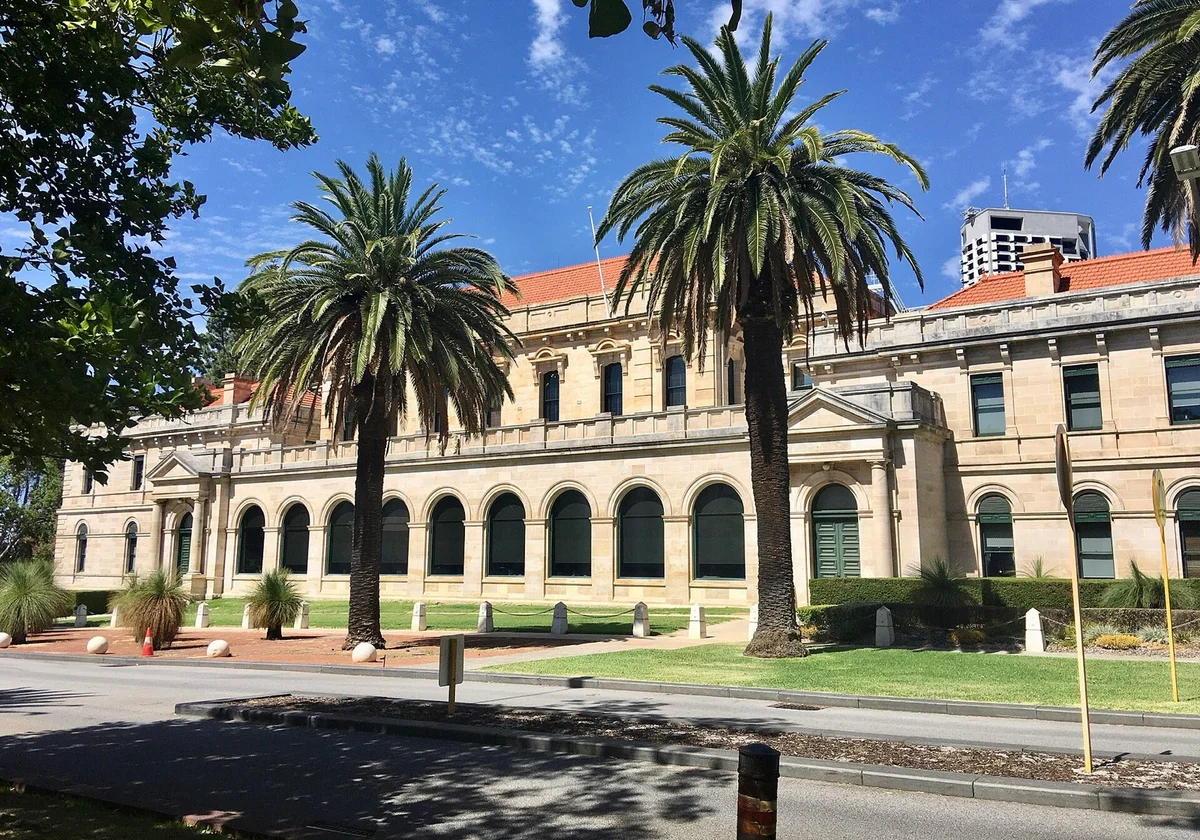
Photo: File photo of Parliament House, Perth. Steelkamp via Wikimedia Commons (CC BY-SA 4.0).

Comments