
Western Australia's fuel state of emergency, declared on 1 April as the war on Iran choked the Strait of Hormuz, was due to lapse at the end of this month. On Wednesday the Governor signed a second Order that keeps it running until 29 March 2027. Here is what the document says, what it lets the government do, what it has been used for so far, what Perth is paying at the bowser this week, and where the war behind all of it now stands.
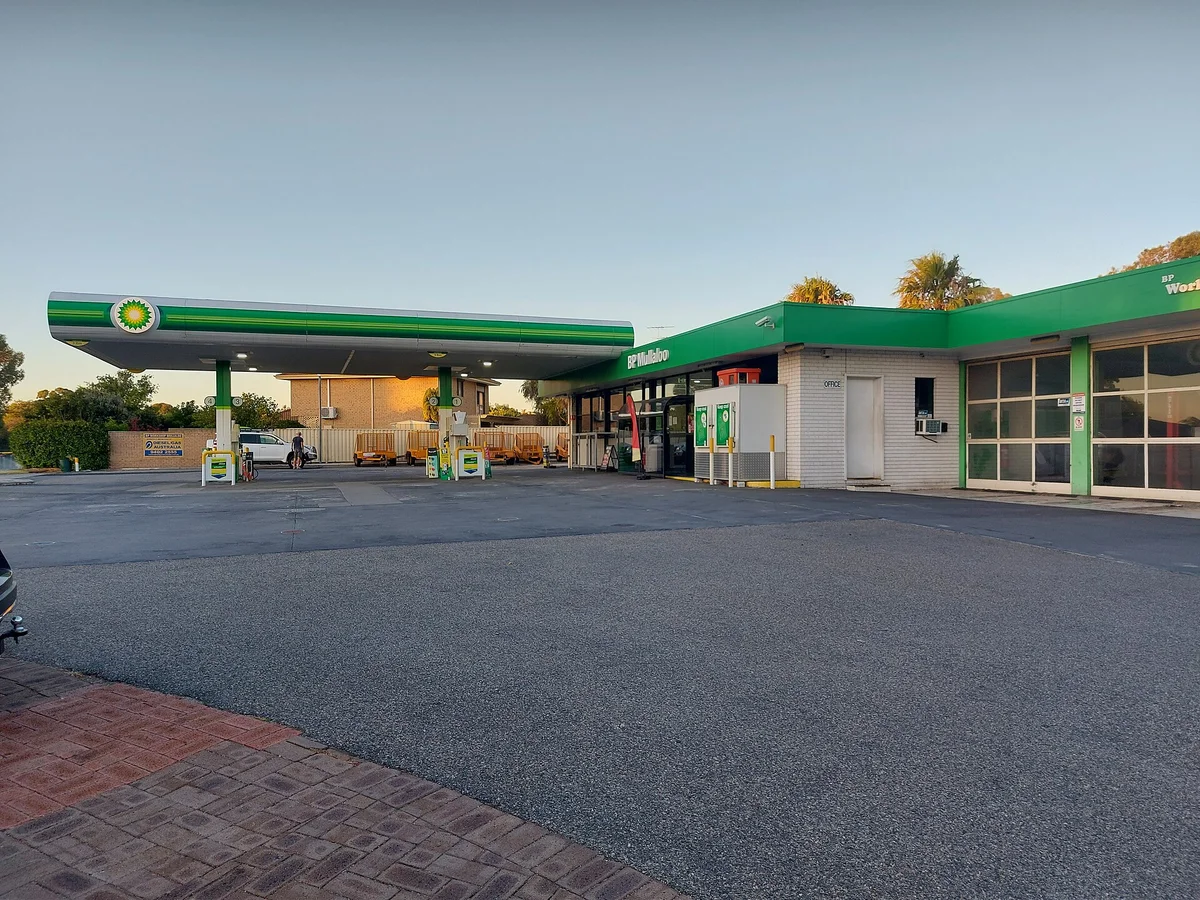
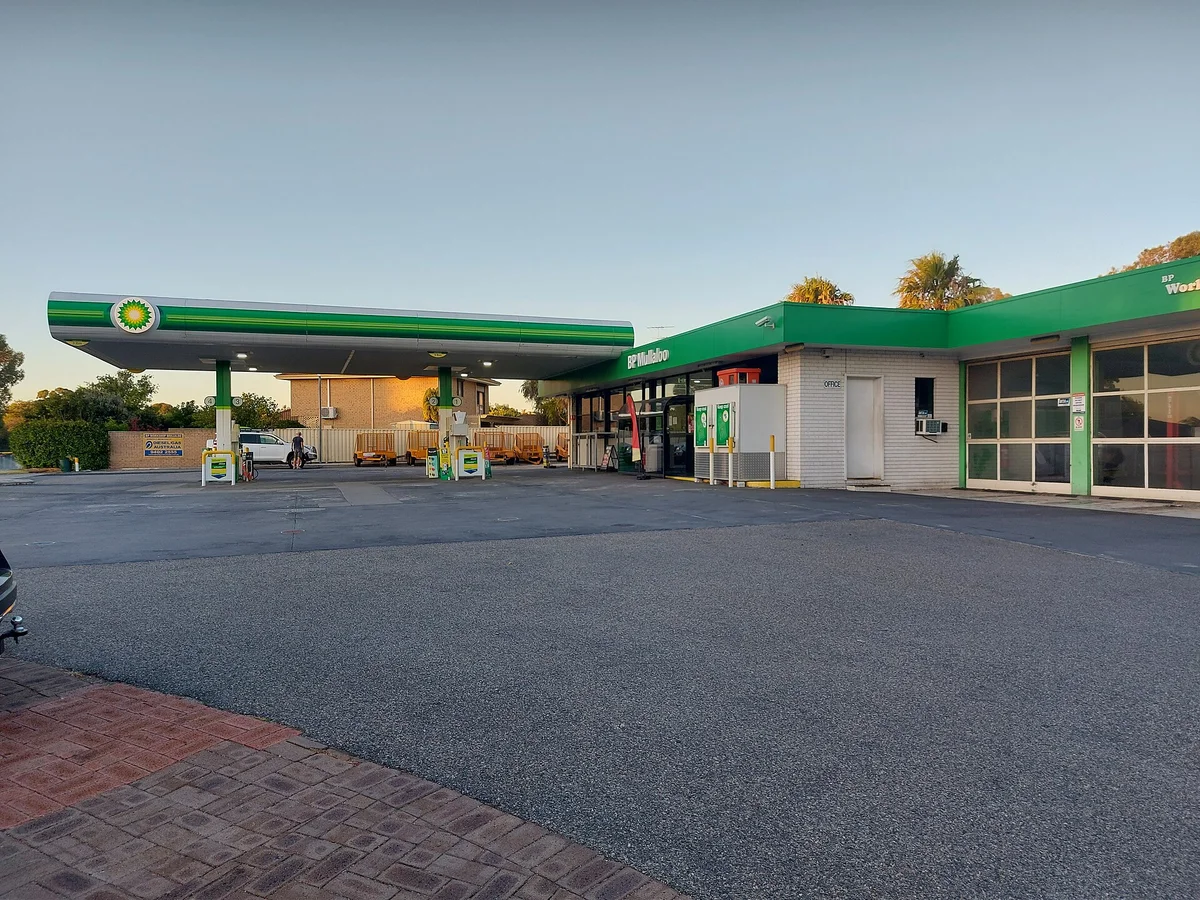
A BP station in Mullaloo. On Thursday 17 September the average unleaded price across FuelWatch's Perth listings was about 230 cents a litre; in mid-February, before the war, the Perth average was about 156 cents. File photo, not one of the stations named in this article: Orderinchaos, CC BY 4.0, resized.

What was signed on Wednesday
The instrument is the Fuel, Energy and Power Resources (Declaration of State of Emergency) Order (No. 2) 2026, published on the WA legislation website on 16 September as SL 2026/195. Its operative text runs to a single page. Made by the Governor in Executive Council under sections 42 and 43 of the Fuel, Energy and Power Resources Act 1972, it does four things:
- It renews the emergency. Its stated purpose is "to renew the state of emergency declared by the Fuel, Energy and Power Resources (Declaration of State of Emergency) Order 2026", the April order. A state of emergency "is declared to exist in the whole State".
- It sets the dates. The order "takes effect from 30 September 2026" and "continues in force for the period ending at the end of 29 March 2027". That is the six-month maximum the Act allows for any single order. The April declaration runs to the end of 30 September; the new one takes effect that same day.
- It keeps the same minister in charge. While it is in force "the administration of the Act is vested in the Minister for Energy and Decarbonisation", Amber-Jade Sanderson.
- It gives the same reasons as April, word for word. The preamble says the Governor "is again satisfied that, by reason of armed conflict and other events and circumstances in Iran, the Persian Gulf and other places in and near the Middle East", and "by reason of disruption of shipping services in the Persian Gulf", the supply of fuel to WA "is being, or is likely to be, affected" and the community "may be deprived of essential supplies or services or a shortage may result".
A second instrument was published alongside it, the Fuel, Energy and Power Resources Regulations Amendment (State of Emergency) Regulations 2026 (SL 2026/196). It is housekeeping: section 57(2) of the Act already carries every emergency regulation across a renewal, and the amendment updates the explanatory note in each of the three sets of regulations made since April so that it says so, continuing "while either" the April declaration or its renewal "subsists". That part starts on 30 September.
Ms Sanderson (Morley, Labor) told the Legislative Assembly about the renewal in a brief ministerial statement at 12.09pm on Wednesday and tabled both documents. "This is good government in action," she said of the supplier and retailer reporting, according to the uncorrected Hansard proof. A paragraph later: "Although domestic fuel supply remains adequate at present, WA is particularly vulnerable to disruptions to international fuel supply chains due to its reliance on imported fuel and significant diesel demand." She then gave notice that at the next sitting she will move that the Order "be and is hereby ratified".
What a fuel state of emergency actually allows
The Act is a 1972 law with an emergency Part bolted on in 1974, after the first oil shock. Section 43 lets the Governor declare a state of emergency when satisfied that "embargoes by oil producing countries, disruption of shipping services" or other events are affecting the supply of fuel, energy or power to the state. Each order can run for no more than six months, but "more than one order may be made" for the same emergency, which is the provision being used now.
Once a declaration is in force, section 47 lets the Governor make "emergency regulations" for a list of purposes that is much broader than anything used so far. They can provide for "ascertaining the holdings of all fuel, energy and power resources"; for "maintaining, controlling and regulating supplies and services", expressly "including a permit or rationing system"; for "the determination of user priority, the prohibition of specified uses" and "the allocation of supplies to prescribed consumers"; and for requiring producers, holders, suppliers, transporters and users to submit returns and information, which may have to be sworn by statutory declaration.
Section 41 says that where the emergency Part conflicts with any other Act the emergency Part "shall prevail", and that emergency regulations have effect "notwithstanding anything" in "any contract or agreement". Section 49 sets the default penalty for breaking the Part or its regulations at $50,000 for an individual and $250,000 for a company, and makes each day of non-compliance a fresh offence. Section 48 makes it an offence to retaliate against or intimidate anyone for taking part in emergency supply operations.
Two safeguards sit in the Act as well. Section 43(5) says that if Parliament is adjourned for more than 14 days when a declaration is made, it must be called together within those 14 days, which is why the Assembly and Council were recalled on 14 April. And section 44 requires the order to be laid before both Houses; if either House does not pass a resolution ratifying it within 30 days of tabling, "the order shall be deemed for all purposes to have been revoked". Ms Sanderson gave notice on Wednesday so that the motion can be moved at the Assembly's next sitting, Thursday 17 September, the last day before Parliament rises until 13 October; the Council, which also sits on Thursday, must ratify separately, and the 30-day clock runs to about 16 October.
Those safeguards are older than the rest of the Part now looks. Four months ago, with the April emergency already running, Parliament passed the Fuel, Energy and Power Resources Amendment Act 2026, in force from 19 May. It lifted the section 49 penalties from $10,000 and an open-ended court-set figure to the $50,000 and $250,000 above; added sections 49A and 49B, the basis for on-the-spot infringement notices; replaced the old good-faith protection with a new section 54 under which the State, the Governor, ministers, public servants and any agency administering the emergency "can have, no liability in tort" for actions taken in good faith under the Part, backdated to extinguish any such liability arising from 5 May; deleted the section that had preserved personal-injury claims; and rewrote compensation so that instead of a claim settled by a judge, a person who suffers loss from complying with an emergency instrument may apply to the minister, who "may" pay what she determines is "just and reasonable", within 12 months, and must refuse anything connected with "a permit or rationing system" or any other restriction on the sale or supply of fuel. The Attorney General's consent is no longer needed to prosecute. If the dormant powers are ever switched on, that is the framework they would run under.
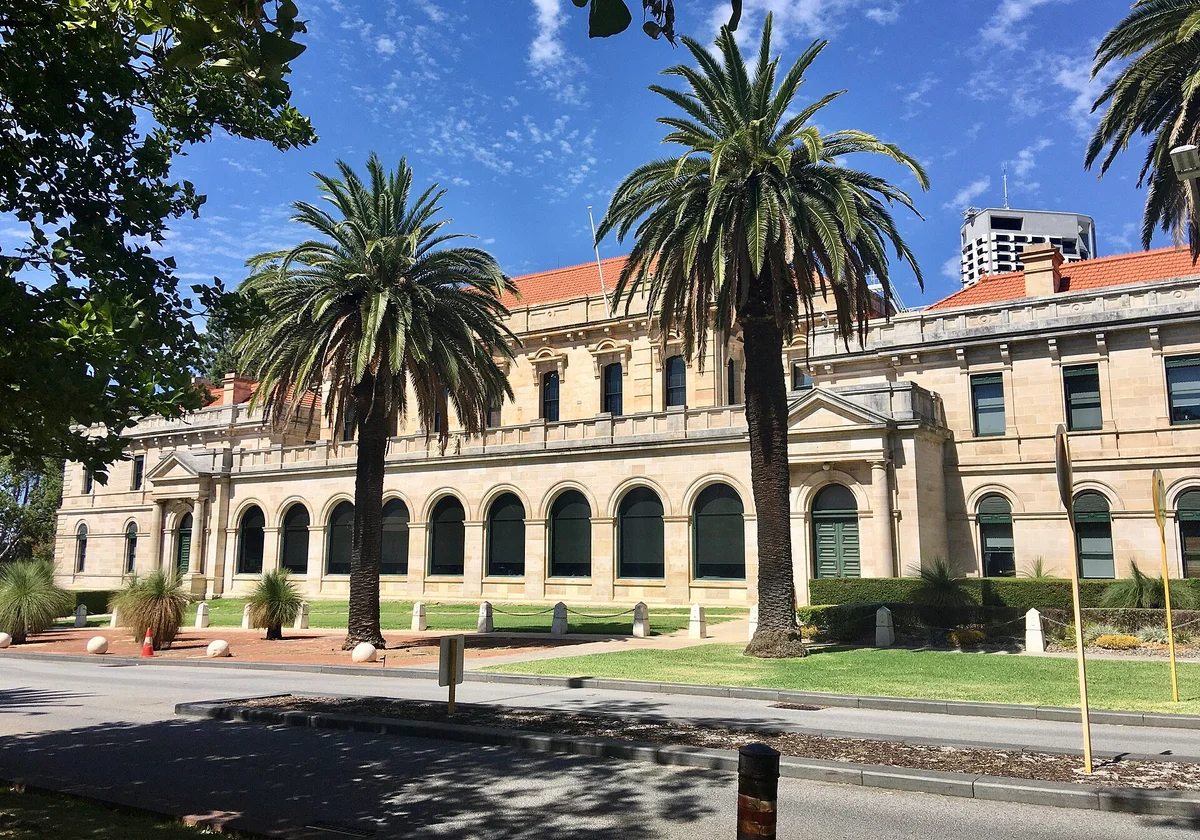
Parliament House. Under section 44 of the Act, an emergency order dies if either House fails to ratify it within 30 days of tabling. Photo: Steelkamp, CC BY-SA 4.0, resized.

What the powers have been used for
None of the rationing, permit or allocation powers has been switched on. Everything the government has done under the emergency so far is about information. Three sets of regulations carry it:
- The first regulations (from 2 April) let the minister order any producer, holder, supplier, transporter or user of fuel, or of diesel exhaust fluid (AdBlue), to hand over information about production, holdings, supply and transport, including "written agreements", "contractual commitments", "current or expected capacity", "pricing" and "customer behaviour", by a deadline, and if required by statutory declaration. The penalty for refusing is $10,000 for an individual and $100,000 for a company, per offence, with each day of continued refusal a new offence. This is the power behind the weekly reports the major suppliers now make on their petrol and diesel holdings. When it was announced on 1 April, the ABC reported that only three of the six major suppliers had been willing to hand the data over voluntarily, and that in one case a single person had overdrawn 1,600 per cent of their normal supply, draining the Goldfields–Esperance region.
- The second regulations (from 1 May) require fuel retailers to notify the Commissioner (in practice Consumer Protection) through the FuelWatch website "as soon as reasonably practicable" when they run out of a kind of motor fuel at a site, and again when stock is back, so the Commissioner can publish outages. A separate instrument, the Modified Penalties and Investigations and Prosecutions Regulations 2026, allows an on-the-spot infringement notice of $4,000 for failing to report.
- The third regulations (from 11 June) turn the same information power on the state's own agencies: the minister can require government departments, Main Roads, the Public Transport Authority, port authorities, Synergy, Western Power, Horizon Power and local councils to hand over any information they hold that is relevant to the emergency, including, in the regulations' own words, to "a permit or rationing system". That is the only place in the instruments so far where rationing is mentioned, and it is as a purpose the information may serve, not a scheme that exists.
Around those regulations sit the measures the government lists as its "nation-leading response": a Fuel Security State Controller and a Fuel Industry Operations Group; a state-owned strategic stockpile of 20 million litres of diesel held at sites including Kalgoorlie, Esperance, Geraldton and Kwinana; FuelWatch extended to every retailer in the state, more than 210 additional sites, with compulsory outage reporting and higher fines for charging the wrong price; heavier road-train loads for perishables; and the one-off $100 Fuel Support Payment to every WA driver's licence holder, budgeted at $198 million and claimable through the ServiceWA app until 31 December.
Wednesday's announcement added $485,000 for the FuelWatch website: a geolocation feature to show nearby retailers and let motorists report price discrepancies directly from the site. The government says FuelWatch has been visited more than 17 million times in the six months since the war began, with monthly visits up from about one million to almost three million. Commerce Minister Dr Tony Buti: "…with more than 17 million visits in the past six months, it's clear Western Australians are relying on the service more than ever."
One more instrument was published on Wednesday that is easy to miss. The Environmental Protection (Petrol) Amendment Regulations 2026 give fuel suppliers and distributors an exemption, for as long as a fuel state of emergency is in force and for at least six months afterwards, from WA's limits on methyl tertiary-butyl ether and vapour pressure in petrol. In plain terms: if the only petrol available is off-spec by WA's environmental standard, selling it will not be an offence.
What it is not
There is no rationing, no purchase limit and no price control in force, and nothing published on Wednesday creates one. The government's fuel security page says Australia holds more than 30 days of reserves and shipments are continuing, that WA remains at Level 2 of the National Fuel Security Plan, and asks people to "only buy the fuel they need". When the Premier announced the first declaration in April he was at pains to distinguish it from the COVID-era emergency: this one, the ABC reported him saying, targets transparency over fuel supply chains rather than directing what individuals do.
The minister's stated reason for renewing rather than letting the powers lapse is the same. The renewal, she told the Assembly, "will enable the state to continue monitoring fuel supply, preserve operational preparedness and respond promptly should conditions deteriorate and escalation under the National Fuel Security Plan becomes necessary". In the press release she put it more bluntly: "we're not taking our foot off the gas."
The opposition has not moved against the powers. Its response has been to ask for an inquiry: Opposition Leader Basil Zempilas (Churchlands, Liberal) has had a motion on the Assembly's notice paper since 14 April that would require the Economics and Industry Standing Committee to inquire into "WA's fuel security, including a domestic fuel reserve, domestic fuel supply and distribution" and report by 19 December 2026. Business News reported the extension on Wednesday under the headline "Emergency fuel powers extended"; the story is paywalled.
What Perth is paying
The powers do nothing about price, and price is what most people feel. On Thursday 17 September, FuelWatch's listings for Perth north and south of the river showed unleaded from 208.5 cents a litre at the Caltex Kwinana Truck Stop to 239.9 cents at dozens of sites, with the average across 393 listings at about 230 cents. Diesel ran from 247.9 to 282.9 cents, averaging about 267. Thursday is the second day of Perth's weekly cycle, which spikes on Wednesdays and grinds down until Tuesday; as Everything Perth reported on Wednesday, not one station in the state was under $2 that morning.
Before the war, on 17 February, the Perth average for unleaded was about $1.56. Within a month it was just under $2.26. Seven months on, the average is roughly 74 cents a litre above where it started, about $44 on a 60-litre tank. FuelWatch lists standard cash prices only, so dockets and loyalty discounts will move the number you actually pay.
The driver is crude. Brent, the benchmark that sets the price of the refined fuel Australia imports, was in the high $US60s a barrel before 28 February. It peaked near $US119 in March, fell back into the $US90s during the northern summer, and this week is back above $US100: futures settled at $US108.75 on Tuesday, the highest close in nearly four months, before easing on Wednesday, and Bloomberg reported physical "dated" Brent above $US130 this week for the first time since April.
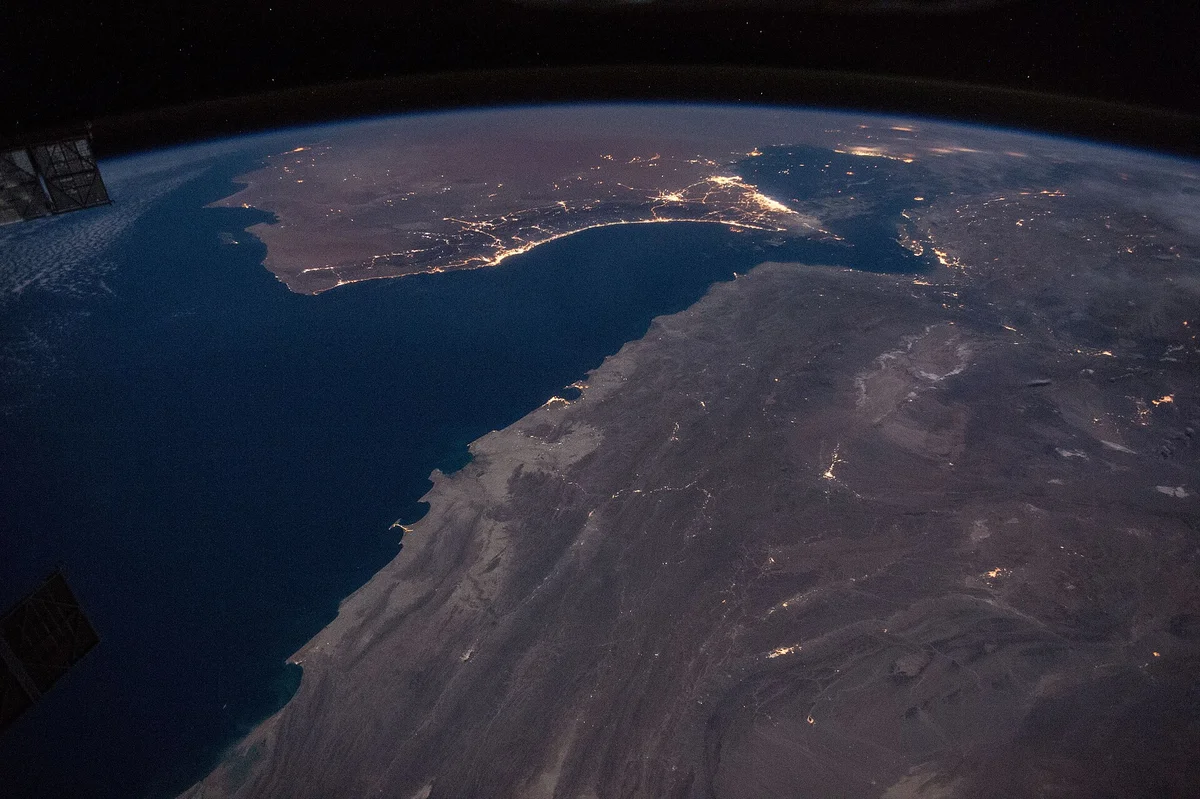
The Gulf of Oman and the Strait of Hormuz at night, photographed from the International Space Station in 2016. About a fifth of the world's seaborne oil passed through the strait before the war. Photo: NASA/Tim Kopra, public domain, resized.

The war behind the price
On 28 February 2026 the United States and Israel attacked Iran, the US under the name Operation Epic Fury and Israel as Operation Roaring Lion, after indirect talks on Iran's nuclear program collapsed. Hundreds of strikes in the first 12 hours hit missile sites, air defences and the leadership. Supreme Leader Ali Khamenei was killed in an Israeli strike on his compound in Tehran, along with defence minister Aziz Nasirzadeh and the Revolutionary Guard's commander-in-chief, Mohammad Pakpour. The stated US aims included ending Iran's nuclear program and regime change. Iran answered with missiles and drones at Israel and at US bases across the Gulf and, over the following weeks, at oil and gas facilities in Qatar, Bahrain, Kuwait, the United Arab Emirates and Saudi Arabia.
On 4 March Iran declared the Strait of Hormuz closed and threatened any ship that tried to pass; by late March it was claiming sovereignty over it. The channel, about 34 kilometres across at its narrowest, had been carrying roughly 20 million barrels of oil a day, about a fifth of the world's seaborne oil. That blockade is the event behind everything WA has done since: within a fortnight of it the ABC was reporting Mid West growers unable to get diesel, and the first state of emergency was declared four weeks later.
The months since have been a cycle of pauses and collapses. A two-week ceasefire began on 8 April; talks in Islamabad failed on 12 and 13 April and the US imposed a naval blockade of its own. On 17 June the two presidents signed an agreement lifting both blockades, and on 28 June the two sides agreed to stop attacking each other. That collapsed on 8 July when Iran attacked commercial ships to assert control of the strait, insisting vessels follow its routes and protocols. Since the start of September the fighting has been a tanker war: US strikes on Iranian oil tankers off Kharg Island and Jask; Iranian ballistic missiles fired at US warships; the Panama-flagged tanker El Gaia, struck by an Iranian missile in August and a drone this month, with two crew missing; an Iranian container ship hit near Hengam Island on 13 September, with one dead. On 14 September, US officials told Axios, an American drone destroyed two Revolutionary Guard boats trying to seize a US unmanned vessel in the strait, killing most of those aboard; Iran says the dead were fishermen. Saudi Arabia has suspended oil loadings at its Red Sea port of Yanbu after pipeline damage.
Traffic through Hormuz is a fraction of what it was. Washington insists the waterway is "fully open", in Al Jazeera's summary of its position, and a US official told Axios 40 ships a day transit "under U.S. military guidance and protection"; shipping-data firms counted seven transits on Monday and four on Tuesday this week, and a ten-day average of 18, and US Central Command says it has redirected 103 commercial vessels. Iran's health minister said this week that 32 kinds of medicine are in short supply and that air-freighted imports cost ten times the normal rate.
Israel's own war with Iran has not ended so much as changed shape. It has not repeated strikes on Iran on the scale of February, and its ground forces are engaged against Hezbollah in southern Lebanon. But its stated objective is unchanged. At a Rosh Hashanah cabinet toast on 7 September, Prime Minister Benjamin Netanyahu said: "We are determined to complete the mission of toppling the regime — its end is near." Casualty estimates compiled from official and independent sources put Iran's dead at between 3,400 and 3,700; Israel's at 72 killed and more than 7,800 injured as at early August; and the United States' at 20 killed and more than 820 wounded. The US Congressional Budget Office this week put the war's direct cost to the US at $US38 billion to 1 August, rising by $US2 billion to $US3 billion a month, and estimated the US has used between half and two-thirds of its missile-defence interceptors since June 2025. Nobody credible is predicting a settlement soon; analysts quoted by Al Jazeera expect more escalation, and one said Iran "definitely has its own plans to make sure that oil prices will shoot up over $100 per barrel".
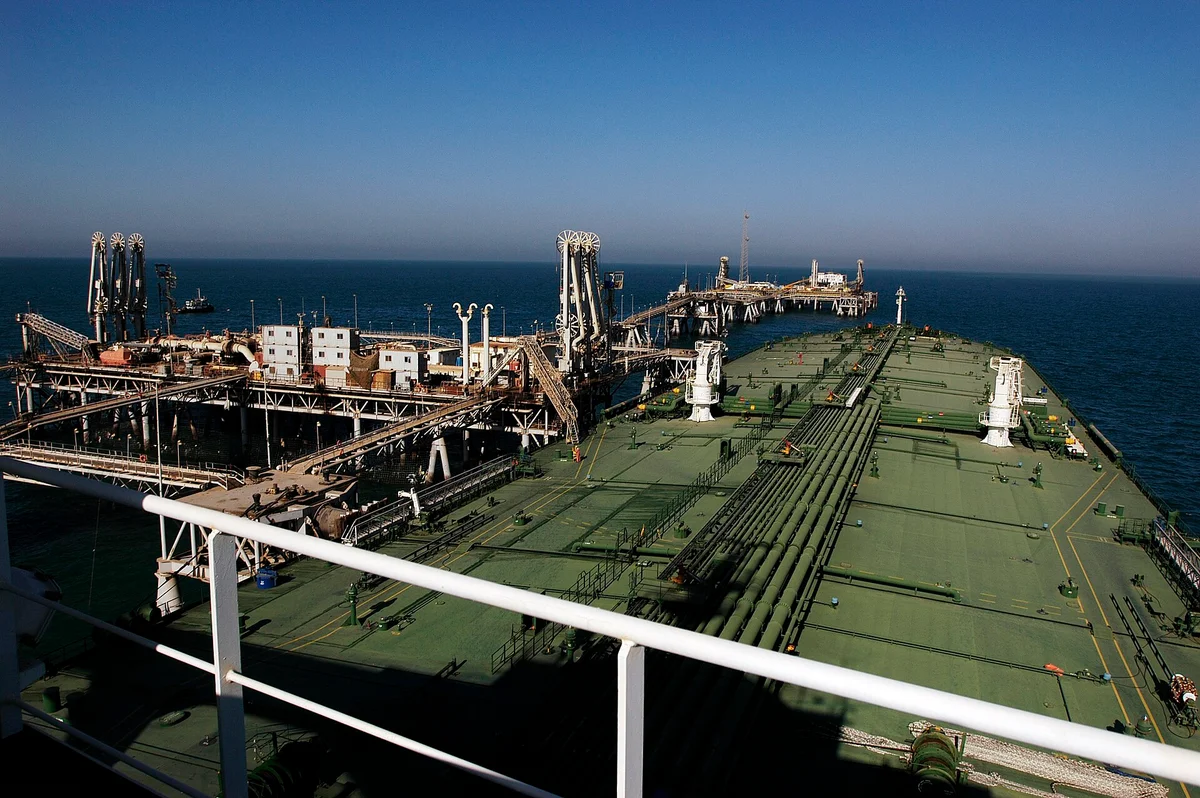
A tanker loading crude at an offshore terminal in the Persian Gulf, 2005. File photo: US Navy, Photographer's Mate Airman Eben Boothby, public domain, resized.
_takes_on_crude_oil_in_the_Persian_Gulf.jpg)
Why Perth is more exposed than most
WA has not refined its own petrol or diesel since BP stopped refining at Kwinana in March 2021 and turned it into an import terminal. Every litre sold in the state now arrives by ship, mostly from refineries in Singapore and South Korea, which between them supplied about two-thirds of Australia's petrol imports last year, with China the main source of jet fuel. In mid-March Australia held about 30 days of diesel and jet fuel and 38 days of petrol, against the 90 days the International Energy Agency asks of its members. And WA's economy runs on diesel to a degree the east coast does not: the mines, the grain harvest, the road trains and the regional power stations all burn it, which is why the state's stockpile is diesel and why the minister's statement names mining, freight, agriculture, construction, power generation and regional communities as the sectors that depend on it.
The April declaration was a response to shortages, not just prices: in March the ABC reported a Mid West canola grower who had stopped seeding because he could get only a third of the 60,000 litres he needed, grain export costs up $16 a tonne in a fortnight, and the head of Northern Star, the country's biggest gold miner, saying "what we don't know, going forward, is the impacts around oil". Those regional gaps, and the discovery that some suppliers would not say where their fuel was going, are what the information powers were built for.
What happens next
- Thursday 17 September, or the next sitting after it: Ms Sanderson moves the ratification motion in the Assembly; the Council must ratify separately. If either House fails to within 30 days of tabling, the order is deemed revoked. The April order must have been ratified, or it would have lapsed under the same rule months ago, and the opposition has asked for an inquiry rather than opposing the powers, so ratification is expected.
- 30 September: the April order expires and Order (No. 2) takes effect. Nothing changes at the bowser; the reporting obligations on suppliers and retailers simply continue.
- By 19 December: if the Assembly agrees to Mr Zempilas's motion, the Economics and Industry committee reports on fuel security and a domestic reserve.
- 29 March 2027: Order (No. 2) expires at the end of the day. If the Governor is still satisfied the grounds exist, a third order can be made.
Whether any of the dormant powers, the permits, the priority lists, the allocation of supplies to "prescribed consumers", ever get used depends on a strait 9,000 kilometres away. For now the state of emergency is a reporting regime with a six-month clock, and the government has just wound the clock again.
Sources: Fuel, Energy and Power Resources (Declaration of State of Emergency) Order (No. 2) 2026 (SL 2026/195) and Fuel, Energy and Power Resources Regulations Amendment (State of Emergency) Regulations 2026 (SL 2026/196), both published 16 September 2026; Fuel, Energy and Power Resources Act 1972, Part III, as consolidated at 19 May 2026, and the Fuel, Energy and Power Resources Amendment Act 2026 (No. 4 of 2026); Fuel, Energy and Power Resources (State of Emergency) Regulations 2026, (No. 2) 2026 and (No. 3) 2026, and the Modified Penalties and Investigations and Prosecutions Regulations 2026; Environmental Protection (Petrol) Amendment Regulations 2026; Legislative Assembly Hansard (uncorrected proof), 16 September 2026, items 7 and 10; Assembly Notice Paper No. 81; WA government media statements of 1 April, 6 May and 16 September 2026, and the government's fuel security actions page; FuelWatch price listings for Perth north and south of the river, 17 September 2026; ABC News, 15 March and 1 April 2026; Business News, 16 September 2026; Al Jazeera, 6 and 7 September 2026; oilprice.com, April 2026; GlobalSecurity.org Iran war situation reports, 12–16 September 2026; JNS, 7 September 2026; Wikipedia's "2026 Iran war" and "Timeline of the 2026 Iran war" entries, checked 17 September 2026.
Comments