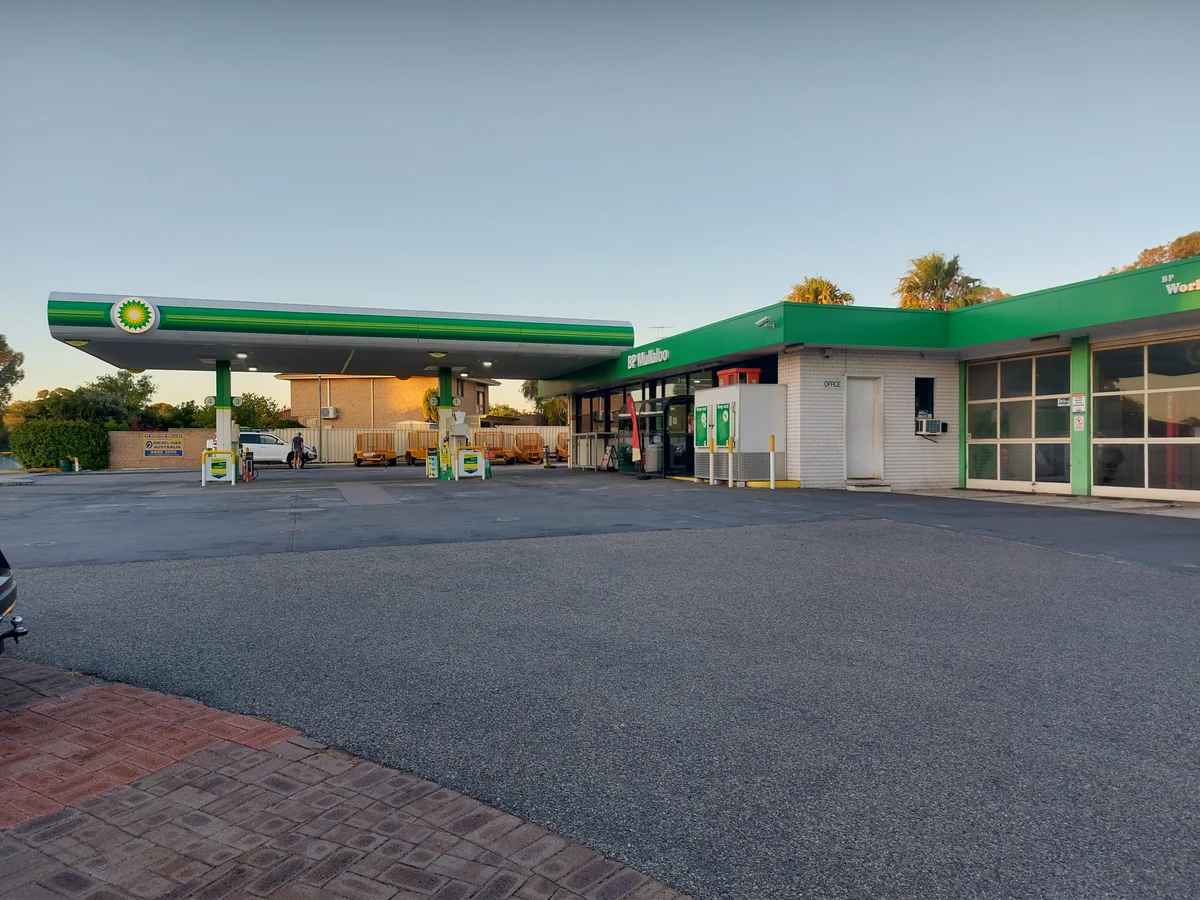

File photo: the BP service station in Mullaloo, photographed on 4 January 2023. Photo: Orderinchaos / Wikimedia Commons, CC BY 4.0. Resized for display.

WA’s latest official fuel assessment points to stable supplies for September and October, even as renewed Middle East disruption raises concerns about what Perth motorists will pay at the bowser.
In its weekly update dated 11 September, the State Government said service-station stockouts remained low and WA held more fuel than at the same time last year. The assessment concerns supply availability; it does not guarantee that prices will remain steady.
The update provides context for PerthNow’s reporting on 13 September about local drivers’ concern over renewed disruption around the Red Sea and the potential for higher fuel costs.
Why prices can rise while fuel remains available
The ACCC’s report published on 11 September put Perth’s average regular unleaded price at 216.4 cents a litre on 9 September, up 5.6 cents from 2 September. Perth’s diesel average was 249.5 cents a litre, up 4.2 cents over the same week.
The Australian Competition and Consumer Commission’s 11 September monitoring update, covering movements through 9 September, said average retail petrol and diesel prices had increased across most locations over the preceding week. It linked the rises to movements in international refined-fuel benchmarks as the Middle East conflict escalated.
That national finding is not a reading of today’s price at a particular Perth service station. It does show why supply reassurance and pressure on household budgets can coexist.
The ACCC’s explanation of fuel pricing identifies international benchmarks and the Australian dollar as major influences on local prices. Changes in those benchmarks can take about two weeks to flow through the supply chain in Australian cities, and longer in regional areas.
Local competition and retailers’ pricing decisions also matter. The regulator distinguishes regular retail price cycles from changes in wholesale fuel costs.
What Perth drivers can check now
Consumer Protection’s current FuelWatch guidance says unleaded prices in Perth and Mandurah follow a seven-day cycle, with a sharp increase on Wednesdays followed by six days of easing. Diesel and LPG do not follow that cycle.
With Wednesday 16 September approaching, motorists can compare the actual prices listed for their area rather than relying on the usual pattern alone.
Retailers must lodge the next day’s prices by 2pm. FuelWatch makes them public by 2.30pm, and those prices then remain fixed for 24 hours from 6am the following day.
The listings show standard cash prices, excluding discounts and extra charges such as card fees. Comparing the same fuel grade and accounting for any conditions is essential.
Drivers can use the FuelWatch map to compare nearby outlets and the following day’s prices before deciding where and when to fill up. The State’s supply assessment and the ACCC’s price report are dated snapshots; the live listings are the practical check for a specific purchase.
Comments