A Kimberley company has formally put forward plans for an off-grid data centre campus of up to one gigawatt about 100 kilometres south of Broome, powered by a vast wind and solar farm with gas backup. Gingerah Energy has referred the project, known as Project Meridien, to the federal government for assessment under national environment laws, revealing a scale that would make it one of the largest energy developments ever proposed for the region.
What is being proposed
According to Renew Economy and Enerdata, the referral describes a data centre with up to 1,000 megawatts of IT load, supported by about 5.2 gigawatts of solar, 1.5 gigawatts of wind, a 5 gigawatt-hour battery and around 1.5 gigawatts of gas generation.
The site covers about 27,520 hectares on Karajarri country. Gingerah Energy is a joint venture between the Karajarri Traditional Lands Association, Perth-based Longreach Capital Investment and Dutch geo-data company Fugro, and holds an Indigenous Land Use Agreement over the area.
Data Center Dynamics reported on 28 October 2026 that the project has pivoted from earlier plans centred on green hydrogen and ammonia to data centres.
How it would be powered
The campus would not connect to any external grid. Instead, an internal microgrid would deliver power, with wind and solar expected to meet about 85 per cent of demand, including cooling, and gas covering the remaining 15 per cent, Gingerah Energy chief executive Jop van Hattum told Renew Economy.
He said running the site on gas alone would consume most of WA's available gas, which is why renewables are central to the design.
"The constraining factor is power and we can deliver that in spades." — Jop van Hattum, Gingerah Energy CEO
Cost and timeline
The total cost, including the data centres, could exceed $40 billion, according to Renew Economy. Connecting the site by fibre optic cable to subsea cable links to Singapore was estimated at about $80 million.
The data centre would be built in stages, starting at 48 megawatts and stepping up to 120, 240, 620 and finally 1,000 megawatts. Enerdata reported a final investment decision on the first phase is targeted for 2029, with construction starting that year, commissioning from 2030 to 2032, and full build-out by 2038.
Mr van Hattum said the partners were funding the early development work and would look to bring in project partners and an anchor tenant.
"We are well funded to work through the development process." — Jop van Hattum, Gingerah Energy CEO
Approvals
The federal referral will determine whether the project is a "controlled action" requiring full environmental assessment under the EPBC Act. Renew Economy reported that a WA planning application has already been lodged and a submission to the state's Environmental Protection Authority is close.
Water, energy and land concerns
Large AI data centres have drawn scrutiny worldwide over their electricity and water use, and the Kimberley proposal is already attracting some community opposition. A change.org petition titled "Stop the construction of AI data centers in rural Western Australia", started in July 2026 and referring to a data centre planned near Broome, had attracted 1,287 signatures when Everything Perth viewed it on 29 October 2026. It raises concerns about drinking water supplies, energy consumption, heat, impacts on wildlife and the character of rural towns, and calls for such centres to be stopped or built in ways that do not harm local ecosystems.
Earlier coverage by W.Media reported the project planned a closed-loop cooling system intended to minimise water use. How much water, land clearing and gas the project would actually need is likely to be tested through the environmental assessments.
Remote WA has seen a string of giant renewable energy proposals, including green hydrogen and green steel hubs, that have struggled to reach a final investment decision, and Project Meridien will need a major customer before it moves beyond the planning stage.
Why it matters to Perth
If it proceeds, the project would bring major construction work and investment to the north of the state, with engineering, finance and supply contracts likely to flow through Perth. It also tests whether WA can turn its land and renewable resources into a home for AI computing, and how the state balances that against water, energy and environmental concerns. The federal decision on whether full assessment is needed is the next milestone.
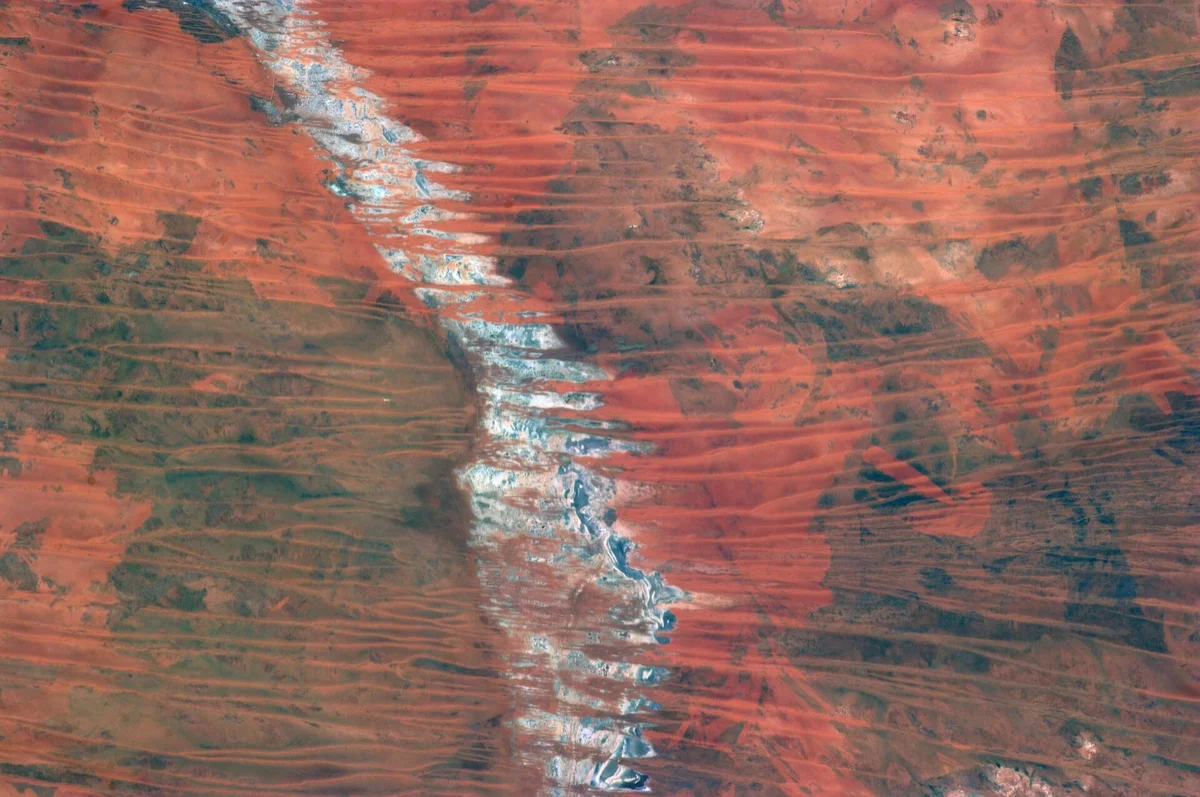
Photo: Generic NASA astronaut photograph of the Great Sandy Desert, north-western Australia, not the project site. NASA via Wikimedia Commons (Public domain).



Comments