Early-career teachers who take a job at one of 39 hard-to-staff public schools in regional Western Australia will be able to have up to $10,000 wiped from their HECS-HELP debt, under a 10-year workforce plan the State Government released on Tuesday 24 November 2026.
The plan also puts $7.9 million into more than 200 scholarships for people studying to become teachers. What it does not include is the thing the teachers' union has been asking for: a review of WA's maximum class size.
What was announced
Education Minister Sabine Winton launched the Strategic Workforce Plan at Mount Lawley Primary School. According to the Government's media statement, it carries two new measures.
The first is the scholarships. From 2027, eligible students studying teaching at WA universities will be able to apply for scholarships worth up to $36,000 each. They cover people starting a Bachelor of Education, a Master of Teaching or a Graduate Diploma in Primary or Secondary Teaching, as well as those studying a Bachelor of Education in Early Childhood Education.
The Government says the scholarships will be aimed at First Nations people, people with disability, people from culturally and linguistically diverse backgrounds, people from regional and remote communities and career changers, along with those who want to teach in high-demand subjects and specialist areas.
The second is a $2.5 million HECS-HELP reimbursement program for around 220 early-career teachers. Teachers working at one of 39 schools across the Goldfields, Wheatbelt, Mid West and Pilbara will be able to receive up to $10,000 towards their student debt, which the Government says almost halves the cost of a Bachelor of Education. It is open to teachers within five years of finishing an accredited Australian teaching qualification in early childhood, primary or secondary education.
"These new scholarships will help reduce the financial barriers for people considering a career in teaching." — Sabine Winton, Education Minister
The statement says the wider plan sets out actions to attract more people into public education, keep and develop existing staff, and strengthen the Aboriginal, regional, rural and remote workforce. Ms Winton, who taught for 27 years before entering Parliament, said it was also about backing the 58,000 people who work in public education in WA.
The class size question
The plan lands as the State and the State School Teachers' Union begin negotiating a new pay agreement. The West Australian reports the union is seeking a 15 per cent pay rise over two years and a review of WA's maximum class size of 32, which the newspaper says is larger than in other States.
The West reports that Ms Winton would not be drawn on either demand, saying she would not pre-empt negotiations that have now started, and that WA classrooms have more education assistants.
"Currently our class sizes are within the maximum limits and have been for an extended period of time." — Sabine Winton, as reported by The West Australian
She told reporters the Government would keep looking at ways to support teachers, including class sizes, extra support staff in classrooms and other ways to cut workload, and said there was no single fix for what she called "a complex puzzle".
Why it matters
The figures reported by The West show the scale of the problem the plan is meant to address. The newspaper says 1178 WA teachers resigned in 2025, including 253 who gave "stress or burnout" as a reason, and that 314 student teachers have been fast-tracked into classrooms this year to fill vacancies before finishing their degrees. The minister acknowledged more needed to be done to keep experienced teachers.
The two new measures are both aimed at the start of the pipeline: getting people into teaching degrees, and getting graduates into country schools. Whether anything is done for teachers already in the job, on pay, workload or class sizes, now rests on the enterprise bargaining talks.
What happens next
The scholarships are due to be available from 2027. Negotiations between the Government and the union over pay and conditions are under way.
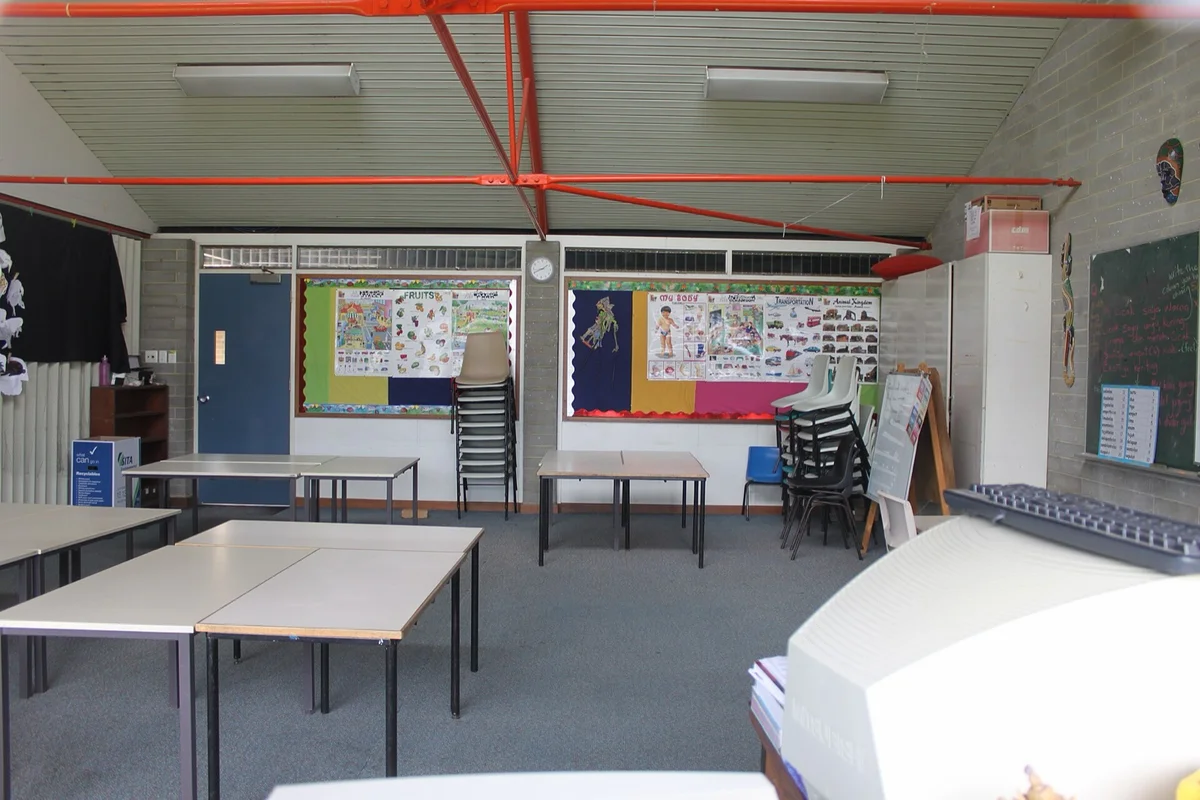
Photo: Jim Owens (Wiki Takes Fremantle) via Wikimedia Commons (CC BY 3.0). File photo of a classroom at Beaconsfield Primary School, taken in 2011; not one of the schools named in the plan.





Comments (1)
Okok
Okok