Western Australia's AI-assisted safety cameras have issued more than 326,000 infringements in their first year of handing out fines, raising about $62 million, according to figures reported by 9News Perth on Wednesday.
The State Government says the cameras are changing behaviour and are here to stay. The Opposition says the change does not last beyond the camera, and the numbers land as WA heads for what 9News reports is its worst road death toll in nearly a decade.
What the cameras caught
Speeding was the most common offence, with 145,079 fines. Another 99,932 infringements were for mobile phone use and 81,453 were for seatbelt breaches, 9News reported.
The Department of Transport has withdrawn about 4 per cent of the infringements, the report said.
The Road Safety Commission says the cameras can detect several offences at once: speeding, a driver using, holding or resting a phone on their body, and drivers and front seat passengers not wearing a seatbelt or wearing it incorrectly. A phone resting on a driver's lap counts as an offence, including when the car is stopped at traffic lights.
A caution-only period for the cameras ended on 7 October 2025. Fines and demerit points have applied since 8 October 2025.
Where they are
Most of the cameras sit on bright yellow trailers that are moved around the State. The commission says the trailers are based in Perth, Albany, Bunbury and Geraldton and are rotated through those regions and beyond.
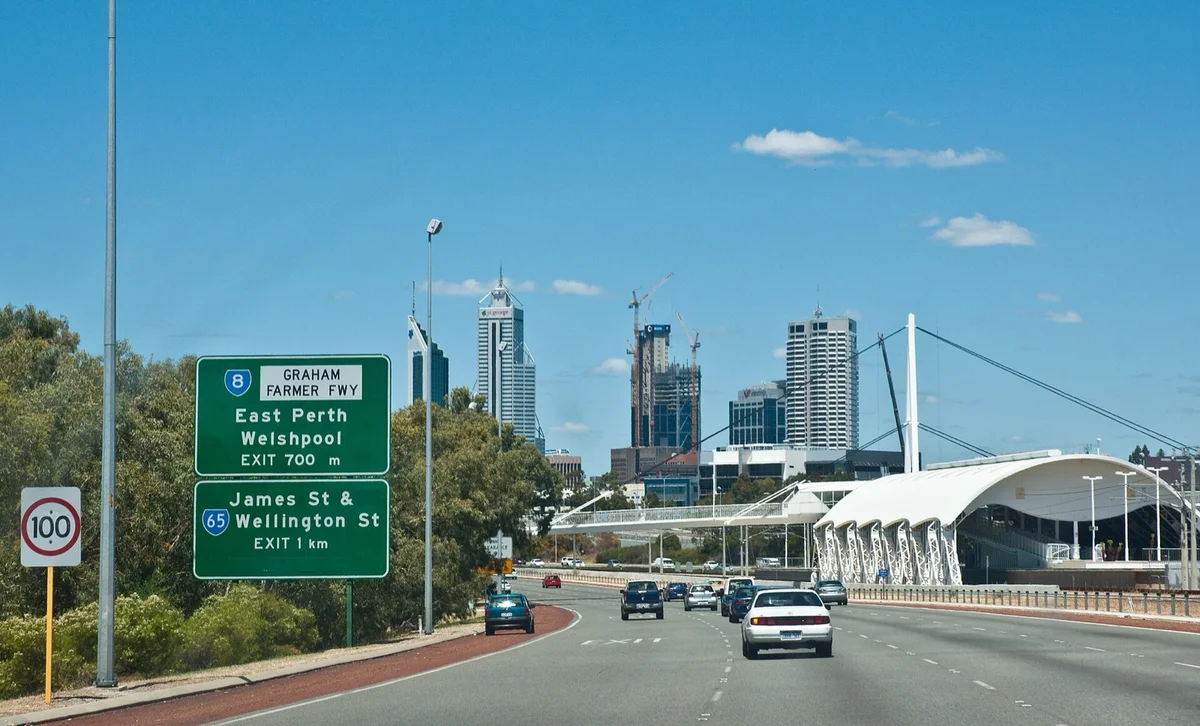
There are fixed cameras on the Kwinana Freeway at Gentilli Way in Salter Point and at Mill Point Road in South Perth, and on the Mitchell Freeway at Vincent Street in Leederville and Karrinyup Road in Stirling.
What changes on 1 December
The two Mitchell Freeway cameras have been fining speeding drivers since 1 June 2026, but drivers caught on the phone or without a seatbelt properly fastened have been sent a caution notice instead of a fine during a six-month grace period.
That period is about to end. From 1 December, the Vincent Street and Karrinyup Road cameras will issue fines for phone and seatbelt offences as well as speeding, 9News reported.
What the two sides say
Road Safety Commissioner Adrian Warner told 9News the technology does what officers on the road cannot.
"Cameras allow us to enforce rules at a scale that police can never do." — Adrian Warner, Road Safety Commissioner
Road Safety Minister Jessica Stojkovski said the cameras had contributed to an average 73 per cent reduction in those offences across the camera network.
Shadow road safety minister Julie Freeman said that figure did not show the whole picture.
"People are not necessarily adjusting their behaviour permanently." — Julie Freeman, shadow road safety minister
Where the money goes
The Road Safety Commission says every dollar from safety camera infringements goes into the Road Trauma Trust Account, which by law must be spent on projects and programs that reduce deaths and injuries on WA roads. It lists road safety education in schools, flashing lights in school zones and road safety infrastructure among the things the account pays for.
Ms Stojkovski told 9News the money went to education as well as enforcement.
How the system works
According to the commission, AI software reviews every image the cameras take. If it finds no suspected offence, the image is automatically and permanently deleted. If it flags a possible offence, at least two human adjudicators review the image before a decision is made to issue an infringement.
Why it matters
9News reported that 189 people have been killed on WA roads so far this year, the highest toll in nearly a decade. The Government credits the cameras with saving lives, while the Opposition argues drivers go back to old habits once they have passed one.
For Perth drivers the practical point is close at hand: from Tuesday 1 December, picking up the phone or wearing a seatbelt incorrectly past the Vincent Street or Karrinyup Road cameras on the Mitchell Freeway will bring a fine, not a warning.
Photo: Phillip Capper via Wikimedia Commons (CC BY 2.0). File photo of the Mitchell Freeway near Leederville station, taken in 2010.



Comments