Visitors to Albany's wind farm have been puzzling over a tall, thin tower standing near the turbines on the cliffs south-west of town. A plaque at its base says it is a wind measurement tower, but there's no figure for its height, and locals are trying to settle the question.
What we do know is why it's there. The mast is gathering the data that will help decide whether one of Australia's oldest wind farms is rebuilt with much bigger turbines.
What the tower is for
The structure is a meteorological mast, often called a met mast. It carries instruments that record wind speed and direction at different heights, around the clock, over a long period.
According to the Summer 2026 newsletter from owner Bright Energy Investments, Synergy Renewable Energy Developments has installed the mast near the existing wind farm to run wind studies. The newsletter says it will collect "a strong data set" of the site's complex wind conditions over the next couple of years, and that the community will be kept informed of decisions about the farm's future.
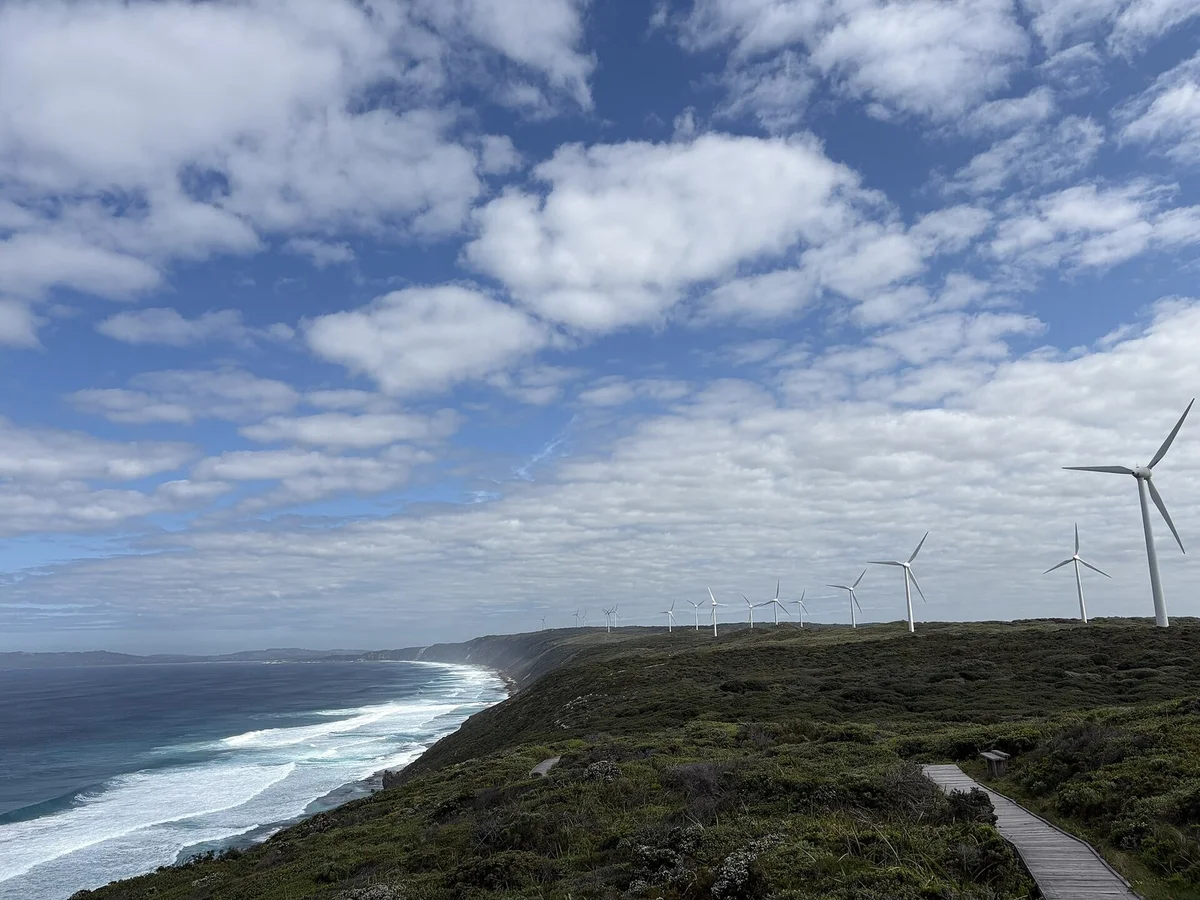
Photo: Aliceinthealice via Wikimedia Commons (CC0).
A wind farm nearing the end of its life
The Albany Wind Farm was commissioned in 2001 with 12 turbines, and six more were added in 2011 as the Grasmere Wind Farm. Together they have a capacity of about 35 megawatts, which Synergy estimates covers about 80 per cent of Albany's electricity needs.
Wind farms typically last about 30 years. The ABC reported in June 2025 that the owners were weighing up whether to decommission or rebuild the site. Bright Energy Investments general manager Tom Frood told the ABC that data from the mast would determine its future.
"[It includes] the option to rebuild the wind turbines with newer technology increasing the generation capacity." - Tom Frood, Bright Energy Investments
Energy analyst Tom Quinn told the ABC each Albany turbine produces about 1.5 to 1.8 megawatts, while modern turbines can deliver six to seven megawatts each from the same footprint.
So how tall is it?
We couldn't find an official published height. The clue is what it is measuring. Met masts are usually built to reach roughly the hub height of the turbines being considered, because that's where the wind matters most.
For comparison, the original Albany turbines sit on towers of about 65 metres, and the tips of their 35-metre blades reach about 100 metres. Newer turbines going up elsewhere in WA are about twice the size of Albany's, according to the ABC.
Locals have had a go at estimating it. One counted what look like joins between the tower's sections and suggested it could be well over 100 metres. Another reckoned it would be at least as tall as the existing turbines. Until the owners publish a figure, those are only estimates.
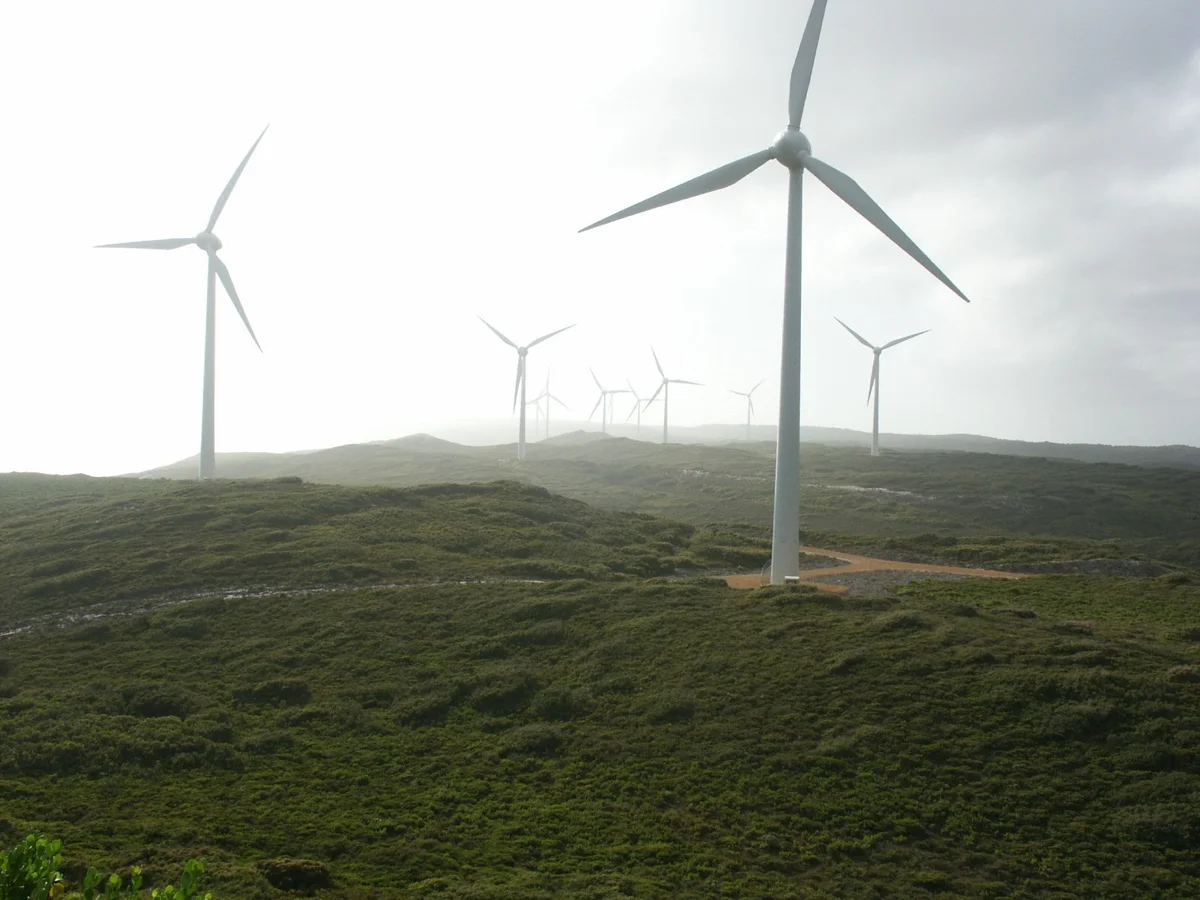
Photo: Nachoman-au via Wikimedia Commons (CC BY-SA 3.0).
Visiting the wind farm
The farm sits about 12 kilometres south-west of Albany at Sandpatch. It's one of the region's most popular attractions, with boardwalks, lookouts and a section of the Bibbulmun Track running past the turbines. The ABC reported it draws about 200,000 visitors a year.
The City of Albany has said it supports redeveloping the site, but that any proposal would need careful assessment because locals value the coastal landscape.
Sources: Bright Energy Investments newsletter (Summer 2026); ABC News; Wikipedia; comments from Albany locals.
Photo (top): Aliceinthealice via Wikimedia Commons (CC0).


Comments