A 16-year-old boy shot dead by police in a Willetton Bunnings car park in 2024 messaged dozens of contacts that night to say he was going "in the path of jihad", the WA Coroner's Court heard on Monday as the inquest into his death began.
James Leslie Hollands, a Rossmoyne Senior High School student, was shot by a police officer on the night of 4 May 2024 after he stabbed a man in the back on nearby High Road. Police later described the stabbing as a terrorist attack. The man survived after emergency surgery.
The inquest is examining the circumstances of the teenager's death, including what schools, police and the agencies running his anti-extremism programs knew in the years and days before it.
The night of the attack
According to evidence summarised by counsel assisting and reported by ABC News and The West Australian, James left home about 7pm and went to an Islamic community centre in Willetton. Around three hours later he sent a message to 33 people calling himself a soldier of al-Qaeda and saying he took responsibility for what would happen that night.
Several of the people who received the message alerted emergency services, the court heard, and his mother also called triple-0. James then made his own anonymous triple-0 call stating an intention to kill men in the area, but would not say where he was.
Carrying a large kitchen knife, he chased one person on High Road who escaped, then stabbed a second man without warning, the inquest was told. Three officers sent to the Bunnings car park at 10.16pm ordered him repeatedly to drop the knife. Two tasers were fired and failed to stop him, and when he moved towards one officer with the knife raised, that officer fired a single shot from about five metres. The officer's identity is suppressed.
Officers performed CPR and James was taken to Fiona Stanley Hospital, where he died. The court heard a police internal affairs investigation found the shot was reasonable and in line with WA Police policy and training, and a separate investigation concluded he had acted alone.
Years of warning signs
Counsel assisting Will Stops told the court concerns about James's interest in weapons, explosives and violent topics first arose in 2020. James had autism, ADHD and anxiety, the inquest heard.
"By 2022, concerns in relation to James had escalated to references to terrorism, engagement with extremist material and repeated experimentation involving explosives." — Will Stops, counsel assisting
Rossmoyne principal Alan Brown gave evidence about a 2022 incident in which James set off a small explosion in a school toilet using material from a lithium battery, and about him viewing and sharing extremist videos on school devices. That year he was placed in the multi-agency Countering Violent Extremism framework and its Intervention and Support Program.
The court heard that in the weeks before his death James assaulted a Jewish classmate and refused to stand at a school Anzac Day service. Mr Brown said staff nonetheless believed he was making progress and was more willing to talk through incidents.
"It was a surprising event from a school point of view because we actually thought we were making a positive difference." — Alan Brown, Rossmoyne Senior High School principal
A warning sent late on a Friday
On 3 May 2024, the day before the attack, school staff found pamphlets beside James's computer that Mr Brown described as containing an inflammatory speech and an image of a man with a rifle. The school emailed his anti-extremism program but received no response.
His case manager, Senior Constable Candice Calitz, told the inquest the email went to a group inbox after hours and was not seen by her staff, and that the school knew to use other contacts if a risk was imminent. She said reports of concerning behaviour had been continuous through 2023, and that no extra support was put in place after each incident, including in the week his grandmother died. He had also stopped seeing his psychologist, she said.
Department of Education lead psychologist Elizabeth Pinkerton told the court her impression at the time was that James was engaging more, but that in hindsight there were red flags, including the recent loss of his grandmother.
What happens next
The inquest is continuing, with further evidence expected from police and the agencies involved in James's case management. The coroner will deliver findings, and may make recommendations about how the State's countering violent extremism programs handle young people, at a later date.
For Perth families, the case has kept a spotlight on how quickly online radicalisation can take hold of teenagers, and on whether warnings between schools and police reach the right people in time.
If this story has raised concerns for you, Lifeline is available on 13 11 14 and Kids Helpline on 1800 55 1800.
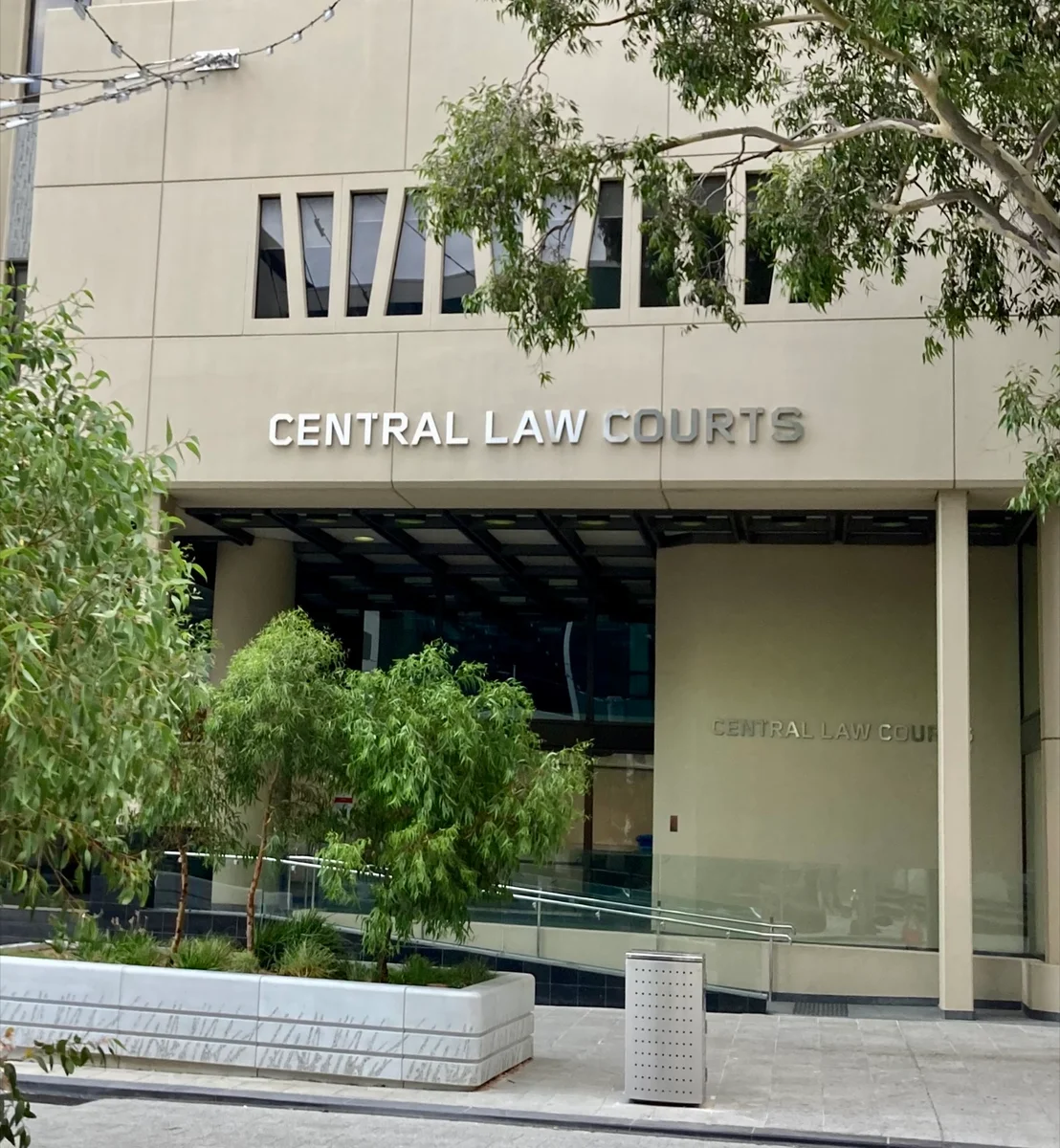
Photo: Central Law Courts, Perth, by JarrahTree via Wikimedia Commons (CC BY 2.5 AU). File photo.




Comments